| |
| |
January 18, 2026 |
|
  |

|
|
A word of caution
Let me please remind you that my humble assessments of any spirits are done from the point of view of a malt whisky enthusiast who, what's more, is aboslutely not an expert in rum, brandy, tequila, vodka, gin or any other spirits. Thank you – and peace! |

|
The Rum Sessions,
today a selection of assorted and varied rums |
I think today we'll go from the sweetest to the saltiest of rums. Does that plan work for you? |

|
Fortin ‘Guarani’ (40%, OB, Paraguay, +/-2025) 
A rum said to be organic, with a finishing of 6 months in maté casks, though we had no idea maté could be housed and matured in oak barrels. Unless, of course, this was merely a means of aromatising this modest little rum afterwards… Anyway, so far the Fortins we've tried had been rather all right, typically scoring between 65 and 75 points on our wee scale. Colour: gold. Nose: it’s soft, a little sweet, not particularly assertive but with hints of ripe banana and indeed black tea, then a faint touch of rubber. The whole isn’t unpleasant. Mouth: alas, there’s a sugary presence that makes the whole thing curiously liqueur-like and dry at the same time. Slightly ‘budget’ orange liqueur and similarly ‘budget’ cane syrup. Finish: short, sweet. Comments: a bit like a light Don Papa, if you see what I mean. I preferred the other Fortins I’ve tasted.
SGP:620 - 50 points. |

|
Saint James ‘Nectar du Maître de Chai’ (40%, OB, Martinique, +/-2025) 
Colour: full gold. Nose: oops, this is spiced rum, with a maceration of prunes and vanilla. It’s far from unpleasant on the nose, it’s just not rum. My fault entirely, apologies for the lapse in attention. Mouth: very sweet. Cinnamon liqueur, gingerbread, heavily sweetened and spiced mulled wine. Finish: long, sticky. Comments: take this rough sketch of a score with a generous pinch of salt. Apologies again, we usually love Saint James.
SGP:820 - +/-60 points. |
Let’s quickly taste a proper rum that belongs to the same excellent group, La Martiniquaise… |

|
Yellow Snake (40%, Island Signature, Rum Terroirs, Jamaica, +/-2025) 
This ‘Rum Terroirs’ series also includes releases from Mauritius, Guatemala and the Dominican Republic. This one’s a blend of rather young Jamaican rums, let’s see if any esters decide to show up… Colour: pale gold. Nose: yes indeed, there are some lovely briny, metallic and tarry touches, and it’s unmistakably Jamaican, lightly so but with precision. Molasses, mentholated honey, cane juice. Mouth: this is really rather enjoyable, dry, a well-composed blend. Lemon, olives, liquorice, all in measured but well-present quantities. Would have had more punch at 45 or 46% vol. Finish: fairly long, dry, spicier. Cinnamon, curry, green walnut, a salty touch, and a wee dab of tapenade. Comments: a lovely Jamaican blend, goes down without trouble, even at room temperature.
SGP:362 - 82 points. |

|
Neisson ‘Profil Équilibre Carole Aurore Assemblage Mizunara’ (52.5%, OB, Martinique, agricole, LMDW Itinéraires, 2025) 
Half of this assemblage was matured in mizunara oak casks, that ‘very rare’ variety which, curiously enough, seems to be used by virtually every spirits brand on the planet at some point or other, even Chivas. Colour: white wine. Nose: it’s true you do pick up a faint mentholy and resinous edge, layered over the usual pure cane, earthy and mineral profile. A lovely touch of lime. With water: essential oils and natural shampoo, we’re not far off a Finnish sauna. Mouth (neat): this is very good, a little unusual and ‘world’, but the combination of pu-ehr tea and pine bud liqueur, mingled with rather saline cane, works a treat. Lovely lime as well. With water: the cane, still saline and quite mineral, takes the lead again, but the pine bud and lime linger on. Finish: fairly long, with no major shifts, except a surprising aftertaste that reminds one of a cross between fino and sake. I swear. Comments: rather experimental, but I quite like it, even if I prefer my Neisson in its natural state, as with all the ‘grands crus’, for that matter.
SGP:371 - 83 points. |

|
Foursquare 8 yo ‘Old Bajan Numéro 6’ (59.1%, Les Frères de la Côte, 950 bottles, 2025) 
This youngster was aged in bourbon casks in Barbados, then shipped to France aboard a sailing boat, where it was finished in a fine de Meursault cask. In short, another playful assemblage… Colour: full gold. Nose: Foursquare takes charge from the start, and quite right too. Lovely oils (sesame, peanut) and notes of bagasse, biscuits, light honey and beeswax. With water: doesn’t budge an inch. Light linseed oil touches. Mouth (neat): once again, the fine de Bourgogne remains very discreet, letting the rum’s lemons and oranges speak for themselves, alongside that typically oily and metallic edge. Perhaps the faintest hint of kirsch. With water: Foursquare all the way, and one almost gets the impression there’s a healthy proportion of pot still in the mix. Lovely grey pepper. Finish: medium length, with a pepperiness that builds steadily. Comments: Foursquare 1 - Fine de Meursault 0. But of course we love Meursault…
SGP:551 - 87 points. |

|
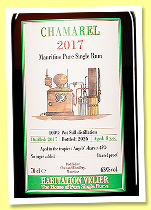
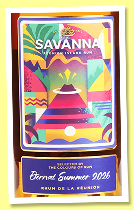
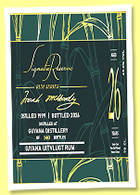
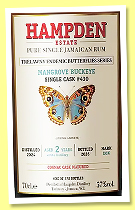
Providence 3 yo 2022/2025 (52.4%, OB, Port au Prince Distillery, La Maison & Velier, Haiti) 
Let’s be honest, we greatly enjoyed the earlier official releases of Providence (2021/2024, WF 86). I find Providence fits nicely somewhere between the very gentle Barbancourts and the wild clairins (which we adore). Colour: pale gold. Nose: we’re very close to pressed cane and bagasse, with some rather striking whiffs of banana with menthol (yes, really), which are quite seductive. With water: humus, patchouli, bidis and a return of the banana, though no menthol this time. Mouth (neat): even better on the palate, the salinity is rather sublime and brings a kind of tension that whisks you straight off to the banks of the Guadalquivir. Lemon, mustard, olives, sugarcane, tequila. It’s a truly singular profile, and that’s precisely what makes it so compelling. With water: it settles and softens slightly, but the profile doesn’t shift an inch. Finish: same again. A nice arrival of liquorice, close to a handcrafted pastis. Wormwood. Comments: I get the impression this is coming along nicely…
SGP:552 - 87 points. |
Let’s move on to the heavy hitters… |

|
Clarendon Estate 12 yo (56.8%, Dràm Mor, Jamaica, cask #1814, 307 bottles, 2025) 
It’s always a pleasure to see British independents taking an interest in rum, though we’ve already tasted marvels from the likes of Cadenhead and G&M. Ah, that Long Pond 1941! Though we’re not talking about the specialists here, like Bristol Spirits… Colour: full gold. Nose: this isn’t a particularly heavy Clarendon, which allows a lovely finesse to emerge—fig leaf, rubber tree, seaweed, small pink olives and quite simply pink grapefruit and passion fruit. I find it all very pretty, very elegant. With water: retreats slightly towards petrol. Mouth (neat): some funk and citrus, let’s say. The rubber tree note is more pronounced, and there’s a caipirinha-like character that’s great fun. In theory, water will sort out the molecules… With water: indeed, we reach a very fine salinity that plays beautifully with the lemon and a light tarry side. Finish: long, with consistent flavours. Comments: a very fine wee bottle, nicely representative of the high standards at Dràm Mor. And once again, apologies—I really can’t manage the accent on the o in Mor. Blame it on French keyboards.
SGP:462 - 87 points. |

|
New Yarmouth 15 yo 2009/2025 (59.8%, Bedford Park, Jamaica, bourbon, cask #1, 221 bottles) 
Cask #1, really! What an honour… Actually, the label reminds me of the first time I listened to ‘Dark Side’, quite a long time ago now. Colour: gold. Nose: boom. Ultra-precision, tar, carbon, wee lemons, sea water. Nothing more, but that’s more than enough. With water: old bicycle inner tube. Mouth (neat): elementally perfect. A mix of lemon juice, diesel fumes, liquorice juice and sea water. That’s it, one could almost call this a nudist distillate. With water: sublime in its tarry and saline purity. Finish: same story. Comments: almost a <DOK, couldn’t be more stripped back. It’s practically constructivist—Malevich and all that, The White Album etc. Not my business, but personally, I’d have gone for a completely white label. Though I agree, that wouldn’t quite resonate online—and on the Web, white kills…
SGP:363 - 90 points. |
We'll finish with a Caroni, alright? |

|
Caroni 27 yo 1998/2025 (57.6%, The Colours of Rum for Absolutely Nuts, This Time No Colours, Edition No.2, Trinidad, 91 bottles) 
A Hampden finish here—it had to happen eventually, didn’t it? Of course, and the name ‘Absolutely Nuts’ suits us just fine, as one might even glimpse the spirit of the Malt Maniacs here. No limits, ad nauseam. Colour: amber gold. Nose: well, this is rather gentler than expected—it doesn’t rip the nostrils apart or rush straight up the olfactory bulb into the brain. Instead, we’re getting notes of smoked pistachio chocolate, toasted sesame oil and soft, almost childlike liquorice. Though in the background, make no mistake, there is tar, old cloth and pine sap. With water: majestic cedarwood, think Cedros de Luxe. Cigar lovers will get it. Mouth (neat): perfect salinity, with varnish, tar and extremely salty pickles. In fact, it’s not just saline, it’s downright salty. With water: perfection achieved, whatever the path. The wood is still very much present, but it’s been tamed. Still plenty of salt—indeed, pure NaCl. Finish: very long, on brined pickles and homemade kimchi. Comments: I’m rather proud of myself—this follows the New Yarmouth perfectly. But these babies… are exhausting.
SGP:363 - 90 points. |
Check the index of all rums we've tasted
|
| |
January 17, 2026 |
|
  |
|
Angus's Corner
From our correspondent and skilled taster Angus MacRaild in Scotland |
|
|
Closed Highlanders (Mostly!)
Every so often a variety of samples from closed distilleries accumulates on my shelf, which is always fun as these sessions are a joy to do and increasingly tinged with emotion as the distance in time since these distilleries were closed, and since bottlings of their makes were more ubiquitously available, has grown considerably. |
 |
|
|
However, we will kick off with a wee aperitif which is a bit of a stretch to say bears any connection to this tasting, other than that it purports to be a 'Highland' malt whisky... |
|
|
 |
Secret Highland 35 yo 1985/2020 (47.4%, Mancarella for Scotch 88 Ukrainian Whisky Community, cask #13, hogshead, 88 bottles) 
Thinking of, and sending solidarity to, all our friends in Ukraine. And wishing an eternity of Loch Dhu and tonic upon Mr Putin! Colour: gold. Nose: oils of the mineral and olive variety, plus waxed hessian, Barbour grease, lamp oil and citrus rinds. Continues with beeswax and linseed oil. Classically old school with these waxy and textural qualities but rounded out beautifully by age. Mouth: same characteristics, really on olive oil, sandalwood, copper coins, mineral oils, bouillon, camphor and wee hints of dried parsley, suet and ink. There's a fragile austerity that is very charming. Finish: medium, slightly herbal, and with a lovely crystalised honey note that brings a sudden feeling of late sweetness. Comments: excellent, extremely quaffable and charmingly old school, very 'old highlands' in a way that makes you think more of Clynelish than Glenmorangie - which this is rumoured to be. Also brings to mind some great, aged dry chenin.
SGP: 451 - 89 points. |
|
|
With these closed distilleries, we'll try to ascend in theoretical order of weight. |
|
|
 |
Caperdonich 23 yo 1980/2004 (58%, Cadenhead 'Authentic Collection', bourbon hogshead, 252 bottles) 
Colour: gold. Nose: paraffin, wet leaves, mossy bark and clay! Another nose that also suggests mineral and olive oil qualities. I fear this theory of 'lightest to heaviest' is DOA! This is superb though, some honeys, waxes, wee beery vibes and all manner of oils, varnish and green herbs. With water: herbs, nettles, oils and camphor galore! Mouth: herbal and flower teas, a lot more pure honey notes, flower honey, beeswax etc. Then back on these beery notes with hops, citrus peels, camphor and more mineral oil and clay. With water: much broader, fatter, sootier and drier, with a peppery side emerging that's really terrific. Finish: long, peppery, slightly salty and herbal, with more waxy and oily qualities. Comments: a very big and very excellent old Caperdonich! The love child of old Glen Grant and Convalmore - arguably.
SGP: 562 - 90 points. |
|
|
 |
Dallas Dhu 18 yo 1977/1995 (59.7%, Cadenhead 'Authentic Collection' for USA) 
Looks like I really enjoyed a sibling cask of this back in 2019 (WF90), and at that time declared my next Dallas Dhu tasting would be July 2025 - we're not actually that late by Whiskyfun standards! Colour: pale straw. Nose: once again, superb! A wonderful oiliness and sense of pure waxiness, there's also lots of putty, clay, white flowers, plasticine and some lovely coal scuttle and watercress impressions. Another of these old school 'highland' profiles that seems all about texture and fatness., only here there's an element of precision that elevates everything. With water: even fatter and waxier now, candle wax and Barbour grease galore, with honey roast parsnip, dried herbs, suet and cask aged mead. Wonderful! Mouth: full on mineral oils, tiger balm, sooty waxy qualities, pebbles, chalk, herbal tea, camphor, ink, waxed hessian and faint medicinal notes. Also a fantastic impression of freshly sheared sheep wool. Very impressive palate! With water: same feelings, an elevated sense of waxy and textural quality, but perfectly balanced by more of these mead and honey characteristics. Also slight vegetal and earthy notes bringing impressions of bouillon, mustard powder and petrichor. Finish: long, drying, waxy, slightly salty and back on leafy, earthy and mineral qualities. Comments: probably up there with the best Dallas Dhu ever bottled, I'll even go one point higher than its sibling from a few years ago, the fatness, oiliness and overall waxiness are superb!
SGP: 462 - 91 points. |
|
|
 |
Convalmore 14 yo 1981 (61%, Whisky Connoisseur, cask #1150)
Colour: pale white wine. Nose: a little compact and shy at first, some herbal impressions such as chives and parsley, also a little peppery but that may be the high ABV. A little time and it gets chalkier, some lemon powder, white mushroom - so far a tad austere. With water: gets heavy on the plasticine and a slight tinge of washing powder. Mouth: hmm, not too sure, also an austere profile, with these lemon powder notes returning in a slightly chemical way. Some funny impressions of concrete, cement and wet plaster. With water: it's fine, but we're some distance from Convalmore's usual stately excellence. A faint feeling of something chemical still lingers... Finish: medium, a little porridgey. Comments: an austere and funny profile that was far more common in the 1990s but that's hardly ever seen today. The great highs came with weird lows, and now both have arguably been ironed out. Make of that what you will...
SGP: 531 - 75 points. |
|
|
 |
Banff 23 yo 1976/2000 (54.5%, Signatory Vintage 'Silent Stills' for USA, cask #2250, 245 bottles) 
Colour: white wine. Nose: it's been a while since I had a Banff, but they really do immediately make you think of mustard and waxes! Mustard seed, powder, curry leaf, beeswax, church candles etc. This one also leads with tiger balm, tiny coastal inflections and beautiful savoury vibes that bring to mind white miso paste and peppery watercress. Power, but also elegance and beauty! With water: a little greener, a little fresher and more citric, also more mineral, more precise and more chiselled! Mouth: terrific! Superbly waxy, drenched in camphor, soft coastal notes, sandalwood, pollens, a drizzle of seawater in a jar of flower honey, more miso, hessian, coal dust and preserved lemon. Brings to mind some Broras of similar pedigree. With water: brilliant! Waxes, mustard powder, beach pebbles, mineral salts, hessian, herbal cough syrups and teas. Finish: long, beautifully drying, mineral, fat, waxy and peppery. Comments: somewhere between Brora and top tier Montrachet! I forget how much I love Banff!
SGP: 462 - 92 points. |
|
|
 |
Brora 13 yo 1982/1995 (60.4%, Cadenhead 'Authentic Collection') 
Colour: pale white wine. Nose: extremely typical. We're immediately all about sheep wool, beach pebbles, bone marrow, kerosine, clay, rainwater, bark, potting shed earthiness, and - of course - waxes! It's funny how these final vintages of Brora often closely recall some of the pre-Brora Clynelish in style, I suppose it makes sense that you would remove the peat and find the original still somewhat intact. With water: cut grass, muddled green herbs, lemon rind, grapefruit and more definite seawater impressions. Beach sand and faint hints of wood smoke and even some lapsing souchong tea. Mouth: it's really all about the texture, the sense of fatness, the weight of the distillate that really sings. Assertive peppery and waxy notes, softer coastal notes in the background, delicate salinity, cooking and mineral oils, more sheep wool impressions and things like ink, crushed nettle and salted honey. Even without peat, this was a huge whisky. With water: fatter and waxier still, but more singular and cohesive. Settles into a more honeyed, gentle profile, some lingering salt and pepper notes, some dried seaweed, some more sheep woold that keeps that farmyard personality alive. Finish: long, perfectly between drying coastal notes, dried out honeys and jumbled minerals. Comments: I suppose it’s very easy to overlook these younger 1980s Brora bottlings given they don't quite have the magisterial impact of the early 1970s vintages. But they have their own charm and this sense of coming full circle, back to something like 1960s Clynelish, is really wonderful and quite moving. I still prefer the Banff on this occasion though.
SGP: 463 - 91 points. |
|
|
| |
January 16, 2026 |
|
  |
Caol Ila in Utter Chaos, Part 3/4 |
Yesterday, we mentioned the Caol Ilas distilled at the old distillery, so up until 1972, the year it was more or less demolished ahead of being rebuilt. Let’s see what we can do…
The 'old' Caol Ila Distillery (Diageo) |
 |

|
Caol Ila 16 yo (40%, Gordon & MacPhail for Sestante, 75cl, +/-1985) 
Gordon & MacPhail held considerable stocks of Caol Ila distilled between 1965 and 1972, most notably from 1969, likely the vintage behind this bottling for Sestante. It’s worth noting that the 1969 16yo ‘old brown banner label’ (WF 93) was magnificent despite its low strength, and this could well be the same batch, shipped unlabelled and later tagged by the importer. Colour: gold. Nose: everything has merged, unified in a dense tapestry of ointments, oils, waxes, and old herbal liqueurs. Irresistibly charming. You reach a point where it becomes impossible to separate the aromas, so tertiary, so intrinsic to the spirit in the glass, that analysis gives way to experience. And perhaps that’s exactly how it should be. Mouth: it brings to mind the Brora 1972s from G&M, slightly worrying at first due to the low ABV, then astonishingly complex and explosive once tasted. Let’s just say it’s the best smoked and salted butter caramel on earth, with a fragility that paradoxically becomes a strength. Finish: inevitably a little short but now comes the parade of missed notes, bergamot and kumquat, smoked fish, incense and ashes. Comments: a Mozart quartet.
SGP:444 - 93 points. |
How to carry on from here? … At random! |

|
Caol Ila 12 yo 2012/2025 (52.3%, James Eadie, Distilleries of Great Britain & Ireland, recharred American oak hogshead, cask #313104, 314 bottles) 
Colour: chardonnay. Nose: not an easy follow-up to the Sestante, but this one holds its own for now, in a style completely opposite, creamier, more polished, thanks to the assertive oak. That said, freshness remains: smoked lemon, oysters, brine, wet ashes… With water: unchanged. Mouth (neat): it works, rich, slightly spicy (cask ‘curry’), but also full of excellent fruit pastes, quince, orange... With water: the saltiness now emerges from the wood. The oak itself is a touch dominant (nutmeg, pepper, ginger). Finish: fairly long, quite cask-driven, with lingering spice. Comments: blind, you’d almost think it was an official bottling. Very good, just a little wee bit too oaky for my personal taste.
SGP:556 - 83 points. |

|
Caol Ila 15 yo 2007/2023 (53.4%, Sansibar for Casa de Vinos Whisky Abbey Festival, bourbon cask, 150 bottles) 
A Scottish-German-Australian bottling, makes perfect sense, doesn’t it. Colour: pale white wine. Nose: it’s a blade, lemon juice and seawater, cuts straight through the sinuses, really ought to be covered by social security. With water: sea spray and coastal breeze, straight from the west coast of Scotland. Mouth (neat): ultra-classic, therefore perfect, tense, lemony, ashy, salty. Nothing much to add, it’s textbook. With water: lemon and grapefruit reinforce the tautness of the whole. Finish: unwavering, and it goes on, and on, and on… right up to that green pepper in the aftertaste. Comments: a whisky like Uma Thurman in Kill Bill.
SGP:467 - 87 points. |

|
Caol Ila 16 yo 2008/2025 (54.8%, Liquid Treasures and The Whisky Fair, Barbados rum barrique finish, Love & Peace series, 274 bottles) 
A 40-month finishing, let’s be honest, at that point we’re just calling it double maturation. Colour: gold. Nose: not especially defined at this stage, though attractive. Water will be key here. With water: I must admit, I’m a little lost, it feels like Caol Ila light. Mouth (neat): the rum cask influence is clearly present, but it doesn’t clash, it’s just a bit… ambivalent, shall we say. With water: much more to our liking now, the whisky has taken back control and the poor rum, which probably didn’t ask for any of this, has more or less gone back to bed. Finish: fair length, fairly rounded. Comments: the finishing seems to have nudged this toward a halfway point between classic Caol Ila and some sort of unpeated ‘Highland’ version of Caol Ila. It’s good, very good even, but was it strictly necessary? Still, love, peace and understanding indeed.
SGP:555 - 81 points. |

|
Caol Ila 12 yo 2013/2025 (54.5%, Signatory Vintage for LMDW Plume, Itinéraires, sherry butt) 
There’s been a fair bit of buzz around this one, and it’s high time we gave it a go. Colour: reddish amber. Nose: salted butter caramel. I repeat, salted butter caramel. Then an old fishing trawler docked in a Breton harbour. Presumably it would smell much the same in a Scottish port, only more of whisky than langoustine. With water: hints of varnish, kirsch and amaretti. Mouth (neat): oh it works, pipe tobacco, amaro, hot peppered chocolate, nocino and Arquebuse (you know Arquebuse?). With water: now it’s the peppercorns leading the charge, especially freshly crushed black pepper. Finish: long, very herbal and spicy, probably miles from ‘the distillery’ but through divine intervention, it all comes together this time. Roasted aubergines and bitter chocolate. Comments: a bit of a UFW (1), borderline garage whisky.
SGP:466 - 88 points.
(1) Unidentified Flying Whisky. |

|
Caol Ila 13 yo 2012/2025 (53.1%, Decadent Drams, first fill sherry hogshead, 212 bottles) 
You can sense from the label that the Decadent Drinks team has some background in the appreciation of flamenco. Colour: amber. Nose: very close to a salty amontillado, packed with walnuts, damp earth and even dried morels. Beneath that, heavily salted butter caramel and wood varnish. With water: lovely acetic and balsamic touches. Mouth (neat): superb bitterness, black pepper, curry, 90% dark chocolate, sherry vinegar and heavily salted jerky. With water: not much change, and that’s a good thing. Finish: same again, only more peppery and bone dry. Brings to mind dark chocolate with chilli, said to be good for you, apparently. Comments: for fans of very dry sherry and peat in tandem. Your humble servant, for instance.
SGP:266 - 89 points. |

|
Caol Ila 15 yo 2009-2010/2025 (57.1%, Decadent Drams, first fill sherry hogshead, 252 bottles) 
This flamenco fixation is becoming a real theme! But we do love flamenco too… and we all remember that magical trio: Al Di Meola, John McLaughlin & Paco De Lucia. Colour: amber. Nose: similar style, though less flamboyant, less acetic and saline, more focused on peat and walnuts, with touches of leather and tobacco. Feels slightly closed, especially after the devilish 2012, but water should sort that out. With water: the tobacco rises to the fore. Mouth (neat): we’re back in 2012 territory, though leaning more toward bitter oranges and lapsang souchong. With water: here the salinity takes the lead, think a rather extreme manzanilla. Finish: same story, lovely length. Black pepper and chilli in the aftertaste. Comments: water is absolutely essential with this one. We also suspect that both of these excellent bottles will benefit from cellaring, or a spot on the darkest shelf.
SGP:366 - 89 points. |

|
Caol Ila 14 yo 2010/2024 (55.9%, The Whisky Blues, ex-Jamaican rum JMWP barrel, cask #318192, 217 bottles) 
JMWP is of course Worthy Park, so let’s see whether this tango between Islay and rum finds its rhythm here, though one wouldn't be too sure, it might well jar. Colour: light gold. Nose: the combination is most earthy, with pronounced tincture of iodine and a faint sulphurous edge. Cabbage soup and spent fireworks. With water: it calms down, Caol Ila reasserts itself, showing some lovely notes of damp ashes and mint infusions, although one wonders whether the latter might be born of the malt-rum coupling. Mouth (neat): very intense, ultra-briny and peppery, you get the sense that the rum and the Islay are taking turns boosting each other, and perhaps it all goes a wee bit too far... With water: once again, it’s Islay that carries the day. Ashes, lemon, seawater. Finish: same elements. A return of fairly assertive pepper in the aftertaste. Comments: a very good Caol Ila but one that rather nudges you out of your comfort zone and may well lose you a little.
SGP:466 - 84 points. |

|
Caol Ila 13 yo 2010/2023 (55.4%, Whisky Age, refill barrel, cask #319312, 220 bottles) 
This one ought to be far more classical… Colour: pale white wine. Nose: indeed, it’s very fresh, on oysters and clams, lemon, fresh seaweed and a touch of wax, then some ashes but of the gentlest sort. With water: a chiselled Caol Ila, of great purity. Mouth (neat): perfect, lemony, brisk, still on ashes and oysters. Entirely clean-cut, simple yet effective, not the faintest hitch. With water: lovely medicinal touches appear, cough syrup, camphor, fir honey, eucalyptus pastilles… Finish: fairly long, precise, saline, very lovely. Comments: tremendous purity here, we’re smitten.
SGP:566 - 88 points. |
Let’s finish with another young oldie… |

|
Caol Ila 12 yo 1982/1994 ‘Cask Strength’ (62.4%, The Cooper’s Choice, VA.MA Italy) 
We’d tasted another 1982 (b. 1995) Cask Strength by Cooper’s Choice just two days ago, and it had been excellent. Colour: white wine. Nose: lighter peat than in more recent vintages at a similar age, with a profile leaning more towards apple than lemon, yet brimming with elegance. Redcurrant, sauvignon blanc, spent matchboxes, oil lamp… In reality we’re clearly in close territory to the previous one. With water: chalk and fresh mint, then the usual virgin wool. From Islay sheep, naturally. Mouth (neat): lemons make a comeback, alongside plum eau-de-vie and vin jaune… But heavens, this is powerful! With water: perfect trio of green apple, smoked salmon and oysters. Finish: long and a little fattier, bringing to mind lemon-infused olive oil, though that’s not exactly my favourite. Comments: so we’d tasted that 1982 by Cooper’s Choice some years ago which had been simply sublime (WF 91) but that one was 30 years old. These younger versions are magnificent too, but even after thirty years in bottle, they haven’t yet attained that ultimate polish. I suspect we might have to wait another 30 years to reach that kind of level.
SGP:466 - 89 points. |
Very well, that makes thirty Caol Ilas for now. I think on Monday we’ll push it to forty and stop there. |
| |
January 15, 2026 |
|
  |
Caol Ila in Utter Chaos, Part 2/4 |
Without further ado, let’s pick up where we left off yesterday …
(Caol Ila
/Diageo) |
 |

|
Caol Ila 8 yo (48%, Wilson & Morgan, Quercus Alba, 2024) 
An amusing mention of Quercus alba, white oak, in other words, American oak, which must represent around 90% of the wood used for whisky maturation in Scotland, whether ex-bourbon or ex-sherry. Colour: white wine. Nose: immediate wafts of iodine tincture, then more classic Caol Ila notes, sea water and kelp, with a rather elegant and restrained smoke. A couple of oysters and an old tin of white paint forgotten in a Scottish warehouse. Mouth: chiselled, smoky, lemony and saline, ultra-classic. Excellent. Finish: the usual and rather irresistible combo of ashes, lemon juice and brine. Comments: this young bairn gets the job done to perfection. In fact, the peat is fairly punchy for a Caol Ila.
SGP:557 - 87 points. |

|
Caol Ila 17 yo 2007/2024 (49%, Cut Your Wolf Loose, refill bourbon hogshead, 285 bottles) 
Everything feels nicely aligned here. Colour: pale gold. Nose: a little lighter and less peaty than the 8-year-old, starting off on petrichor and damp hay smoke, then warm bread dough. In the background, an empty seafood platter, post-meal. Mouth: this shifts into more classic territory, smokier, drier, more ‘fino’, with plenty of ashes, green walnut, and the expected oysters. There’s also a touch of chlorophyll. Finish: fairly long, quite singular, with something akin to smoky chlorophyll syrup, should such a thing exist. A whisper of Maggi and mint lingers in the aftertaste. Comments: more singular than the young Wilson & Morgan, and just as much to my liking.
SGP:456 - 87 points. |

|
Caol Ila 8 yo 2016/2025 (44.3%, Jean Boyer, Gifted Stills of Scotland, barrel, 653 bottles) 
A house we’ve always held in high regard, they were instrumental in introducing malt to France under the Auxil label. Colour: white wine. Nose: the fruitiest so far, with immediate but subtle notes of pineapple and mango that marry well with CI’s trademark coastal freshness. Then grapefruit, ashes and oysters take over, followed by seaweed. Mouth: saltier, more 'sea water', lively yet disarmingly charming, lemony, with notes of kippers but dominated by ash. Delightful. Finish: a light duet of liquorice wood and gentian, not unusual for this profile. Good length and excellent freshness. Comments: yet again, a slightly different profile, but overall quality remains consistent, meaning excellent.
SGP:566 - 87 points. |
Right then, something even younger, though in our modest experience, peat easily adds the equivalent of five extra years in terms of perceived maturity. So 10 = 15, if you like. |

|
Caol Ila 2017/2024 (46%, Signatory Vintage for Intercaves, 2nd fill Barbaresco finish, cask #67583) 
When it comes to red wine finishes, we tend to think second fill is better than first fill. And perhaps third fill better still, but let’s not stir up too much trouble… Colour: pale gold, with the faintest salmon hue, nearly invisible. Nose: the wine influence is certainly there but remains discreet, some lingonberries perhaps. Otherwise, a young and flawless Caol Ila in classic form. But it’s the palate that really matters in this kind of setup… Mouth: similar impression, a slightly grippy vinosity appears, yet the balance of ashes and seawater isn’t disturbed. Let’s just say we’ve moved from grapefruit to pink grapefruit. Perhaps… Finish: good length, more saline, but without slipping into any sweet-salty territory. Comments: I still prefer the naked versions, but I must admit this little one was put together with care, and it’s very good indeed.
SGP:566 - 84 points. |

|
Caol Ila 12 yo 2010/2023 (56.4%, Whisky Age, refill barrel, cask #319311, 209 bottles) 
True artists behind these labels, cooler than Mr Grok, really. Here it’s MasonYin, worth a search. Colour: white wine. Nose: perhaps it’s the higher strength, but this one feels much oilier and fatter than the others, pistachio oil, olive oil, before moving on to roots, carrots, seaweed, and even winkles. With water: penetrating now, penetrating oil, motor oil, then chalk and virgin wool. Mouth (neat): some rather unusual petroly notes for CI, paraffin, damp cardboard… I reckon water will sort that out. With water: still a bit of that cardboardy and even faintly cologne-y edge, otherwise we’re back on ashes and seawater. Finish: long, briny, almost slightly vinegary. And yes, still a touch of wet cardboard. Comments: a rather unusual cask, this isn’t your textbook ultra-clean Caol Ila. But it’s still very good.
SGP:565 - 84 points. |

|
Caol Ila 1984/2000 (59.8%, Gordon & MacPhail, CASK, cask #6098-6101) 
The 1984s haven’t always been magical under the Connoisseurs Choice label, but this one might be a different beast. Colour: chardonnay. Nose: immaculate, candle wax, ashes, sea water and shellfish. What’s lacking here, compared to younger vintages, is citrus. On the other hand, there’s plenty of mercurochrome so far. With water: as is often the case with G&M at cask strength, the whisky turns quite cloudy once diluted. The nose becomes gorgeous, fresh paint, mostly. Mouth (neat): this time it’s apples and lemons, plus peppered olives. Rather fatty, and absolutely splendid. With water: fantastic, and still very powerful at around 45% vol., our favourite reduction level. Cough syrup, but the kind that would cure much more than a cold. Finish: very long, with a pinch of chilli pepper added to that syrupy mix. Slight camphor in the aftertaste. Comments: loads going on here, this is simply excellent.
SGP:567 - 90 points. |

|
Caol Ila 1984/1996 (50%, Moon Import, Dovr-Toutes-Mares) 
We have always wondered what on earth that series’ name was supposed to mean. Now that we’ve got ChatGPT, we dared to ask, and it turns out even it hasn’t got a clue. For once, no made-up answers. Likely something to do with ancient geography, going by the labels, but certainly not Latin. Colour: white wine. Nose: here comes the beeswax and paraffin, overripe apples, whelks and clams, with very soft, almost vanishing peat. With water: old wax polish and the interior of a vintage car, not necessarily Italian, with freshly polished leather seats. Mouth (neat): indeed, it’s rounder, more honeyed and waxier than the G&M, though still with plenty of grip. Moules mariniere and cédrat liqueur. With water: you’d never guess it was just twelve years old, ashes, brine, olives and maritime smoke return. The wax has almost faded. Almost. Finish: fairly long, on the classic trio of oysters, ashes and lemon. The beeswax comes back in the aftertaste. Comments: excellent stuff, I’m quite sure the 29 years in bottle have done it a world of good.
SGP:556 - 90 points. |
Let’s get back to the young ones… |

|
Caol Ila 17 yo 2008/2025 (57.5%, Fadandel, ex-bourbon quarter cask, cask #314559) 
The size of a quarter cask can vary depending on whether it's a quarter of a barrel, a butt, or something else entirely. Laphroaig’s quarter casks, for instance, hold around 130 litres, not exactly a quarter of an ASB. So yes, it’s a bit messy… Colour: full gold. Nose: gentle wafts of menthol, clearly a more active cask, but balance hasn’t been compromised in the slightest. Some rubber and seaweed. With water: phew, we were worried, but while the wood is very present, the distillate holds its ground. At first, it feels like someone smoking a Kool menthol cigarette. Not in Europe though, apparently that’s been banned since 2020, so I’ve just learnt. Mouth (neat): creamy, courtesy of the cask. Beyond that, ashes, pepper, curry, oyster, lemon… With water: this is where it becomes more classic, even if the wood remains prominent. Brine, pepper, turmeric, ashes and so on. Finish: very long and even spicier. Comments: perhaps not the ideal dram to follow those sublime 1984s from G&M and Moon, but didn’t we agree to taste things at random?
SGP:567 - 85 points. |

|
Port Askaig 16 yo 2008/2025 (54.2%, Elixir Distillers for LMDW Itinéraires) 
Yesterday’s bottling for Germany leaned into new or activated oak, this one may prove quite different. Colour: gold. Nose: ultra-precise, almost skeletal but in the best possible way, so p.r.e.c.i.s.e. Like dousing a fire in a limestone hearth with seawater. With water: more classically coastal now, new wool jumper and wafts of boot polish. Mouth (neat): much more texture here, and while the oak clearly had its say, the lemon crème with green pepper and paprika feels rather refined. With water: it finds balance, though the wood remains active, lemon tart, heavily steeped green tea, ginger, cigar ashes. Finish: long, always dancing between active wood and saline, ashy freshness. A whisper of coconut on the aftertaste, even a touch of Thai broth. Comments: excellent, very modern, focused, and full of intent.
SGP:666 - 86 points. |
I think we’re at nine, we did say ten at a time, so just one more for today. Maybe another old one? |

|
Caol Ila 24 yo 1974/1998 (53.3%, Scotch Malt Whisky Society, #53.32, 325 bottles) 
One of the early fillings from the newly rebuilt Caol Ila distillery, which had just emerged from a complete reconstruction. Strangely, many 1974s popped up among the independents, but then again the distillery’s production capacity had just been significantly increased. Colour: pale gold. Nose: oh yes, manzanilla, lemon juice, green walnut, smoked salmon, vin jaune, a touch of curry, a smidgen of mustard, it’s all eminently coherent. With water: just add two or three drops of mercurochrome. Mouth (neat): perfect, creamy, packed with citrus and ashes. The precision is so sharp it’s almost embarrassing. With water: it shifts gears entirely, luminous salinity, eucalyptus, and a medley of ashes in all styles. Pine, charcoal, tobacco, beech, hay… Finish: long, salty and bitter in the most beautiful way. Bark, roots… Only the aftertaste feels slightly raspy and a touch coarse. Comments: as the saying goes, here’s a whisky that had plenty to say, and said it with firm conviction.
SGP:566 - 91 points. |
We’ll try to taste some Caol Ila from the old distillery starting tomorrow. For now, good night. |
(Thank you again, KC and Tom) |
| |
January 14, 2026 |
|
  |
Caol Ila in Utter Chaos, Part 1/4 |
You may already know this, but we love vertical tastings, especially by vintage, to track any changes in style over time. But we also really enjoy diving into large sessions in complete disorder — it's more fun that way. You just have to make sure not to start off with an absolute beast that could ruin the rest of your tasting. Oh, and take your time if you've got any. Here we go… |

(Caol Ila/Diageo) |

|
Caol Ila 14 yo 2011/2025 (58.7%, Best Dram, 1st fill red wine barrique, cask #900098, 279 bottles) 
Entirely matured in a Bordeaux barrique, not just finished therein, which is worth noting, although the colour shows no salmon or rosé hues whatsoever, which is rather reassuring. Colour: let’s say light apricot. Nose: this is remarkably gentle, with pink peppercorns and assorted small red berries, all rather well-balanced, though at the cost of Caol Ila’s usual feral edge, already somewhat tamed in general, now rather dialled down. Some chalk, ashes, and oysters in raspberry jam—an experiment one ought to attempt someday, perhaps. With water: bruised strawberries on the ground, plus a few fresh rubbery notes. Mouth (neat): smoked and salted red fruits, say redcurrant jelly licked off burnt driftwood. The pink pepper returns, now with pink grapefruit thrown in, of the fleshy, bittersweet kind. With water: green pepper, pink pepper, and briny water. Finish: fairly long, though without any further evolution. Comments: really not bad at all, but it remains something of an oddity. A fine opener to kick off a session.
SGP:655 - 81 points. |
May as well go for a sister cask while we're at it... |

|
Caol Ila 14 yo 2011/2025 (53.5%, The Stillman’s De, 1st fill marsala, cask #900113, 290 bottles) 
Marsala ought to be far less deviant than red Bordeaux, and indeed, that seems to be the case. Colour: full gold. Nose: the aromas of the Sicilian wine and those of the whisky are far more aligned here, or adjacent if you prefer, than in the previous configuration. Caol Ila comes through much purer, with crab, shellfish, ashes, sea water, and a trace of cigar tobacco trailing its own ashes. With water: a brand-new box of rubber bands and a handful of bitter almonds. Mouth (neat): excellent, with bitter oranges, lemon, sea water, ashes, greenish peat and tiny pickles in brine. With water: just lovely. Finish: very elegant too, with a faint touch of mustard. Comments: I’ve no idea if this was Grillo, thus a white Marsala, but it could well be. Not all are great, but from top houses like De Bartoli, Grillo can be utterly splendid. Just my two pence… In any case, in this rather particular context, it leaves the red wines in the dust.
SGP:566 - 87 points. |

|
Port Askaig 10 yo 2014/2025 (57.8%, Elixir Distillers, for Kirsch Import, toasted barrel, cask #1033) 
It’s long been accepted that these Port Askaigs are Caol Ila in disguise, barring the very oldest ones, and nothing has come along to convince us otherwise so far. That said, peated Bunnahabhains could also be contenders. Colour: gold. Nose: rather rich and creamier than the previous ones, with banana, mastic, camphoraceous touches and seaweed dried on a sunny beach. We’re just waiting on the oysters now… With water: sauna oils and freshly sawn wood, a faint ‘IKEA note’, if you will. Mouth (neat): the banana’s back, some toastiness perhaps, then lashings of mustard and curry. The cask was seriously talkative. With water: it’s the wood calling the shots here. Finish: long, with paprika and more curry. Comments: oak is cool, but let’s not overdo it. That said, this one’s very, very, very good, of course.
SGP:575 - 84 points. |

|
Caol Ila 'Distillers Edition 2023' (43%, OB) 
This one's never quite been our thing, and pairing Moscatel with Caol Ila remains something of an uphill task. Let’s press on, then… Colour: pale gold. Nose: you do get the muscat loud and clear, yet it doesn’t clash too much with the Islay side—here in a softer guise, leaning slightly towards mint. Mouth: vinous, but not bad at all, fairly fresh, muscat-laced indeed, aromatic and slightly sweet. Finish: pink grapefruit, lightly salted and peppered. Comments: really quite alright, even good in fact, though it’s not as if we’re short on other Caol Ilas.
SGP:555 - 81 points. |

|
Caol Ila 10 yo 2014/2024 ‘Edition #28’ (57.1%, Signatory Vintage, 100 proof, 1st fill & refill oloroso sherry butt) 
A most commendable and ‘clever’ series from SigV. Colour: pale gold. Nose: I suspect the proportion of first fill was kept relatively low, and if that’s the case, so much the better, as everything remains wonderfully fresh, with overripe apples, soft leather, whelks and salmiak. Really lovely. With water: a touch of eucalyptus and medicinal notes, mercurochrome, and pink grapefruit peel. Mouth (neat): echoes of the official Cask Strength, as far as I recall, with green walnut, ashes, fine bitterness, seaweed and oysters. With water: elegantly chiselled peat, as they say, blended with lemon and bitter notes of the ‘Italian’ variety, not necessarily bright red, mind you. Finish: long, vibrant, fresh, peppery and peaty. No dissonance whatsoever. Comments: truly beautiful and admirably classic, I nearly went up to 88.
SGP:456 - 87 points. |

|
Caol Ila 4 yo 2019/2023 (61.4%, Milroy’s Soho Collection, 1st Fill Rivesaltes, casks #309863+ 309880) 
Was this meant as a provocation, or was there sound reasoning behind offering a Caol Ila at just 4 years of age? And matured in Rivesaltes, no less? Let’s see… Colour: gold. Nose: no idea what kind of Rivesaltes this was, but it certainly shows. Feels a bit like a CI DE at cask strength, if you will. Mandarins, muesli, peaty smoke, rose petals, porridge, grape berries… With water: the distillate regains control, with a rather lovely combo of camphor, mint, and eucalyptus—quite unexpected in this context. Mouth (neat): very ‘trans’, with loads of peppered apples, apricot jam stirred with lapsang souchong, and blood orange. You get the idea. With water: same evolution as on the nose, once hydrated—more camphor, mint, eucalyptus and a touch of lemon. Finish: long, fresh, medicinal. Comments: there’s a provocative edge to this slightly transgenic CI, but the job’s been very well done. I was wary at first, but in the end, I like it quite a lot.
SGP:566 - 85 points. |
While we're at it with wine... |

|
Caol Ila, 10 yo 2015/2025 (58.3%, Lady of the Glen, refill ruby Port finish, 300 bottles) 
The word ‘ruby’ is a bit unsettling, but ‘refill’ is somewhat reassuring. Beyond that, we trust Lady of the Glen. Colour: mirabelle with a faint onion-skin hue. Nose: not bad at all. Strawberry sponge, white chocolate and pistachio (not quite Dubai-style, mind), then chamomile and wild rose. It’s different. With water: damp earth, soot and seaweed return in earnest. Mouth (neat): a rather fine winesky, peppery and citrus-driven, with a good dose of bitterness. With water: more pickled now. Italian-style preserved lemons, if you like. In the end, it’s Italian cuisine that seems closest in spirit to malt whisky, which might explain its early success across the Alps. Finish: long, sweet-salty-bitter. Comments: for a ruby Port paired with peat—a rather improbable combination, let’s be honest—this one turned out rather well.
SGP:566 - 83 points. |

|
Caol Ila 17 yo 2001/2019 (57.9%, Gordon & MacPhail, Connoisseurs Choice, for Shinanoya Tokyo, refill American hogshead, batch #19/063, 247 bottles) 
Colour: very pale white wine. Nose: oh lovely, almond milk, paraffin, fresh butter, fresh tar, shellfish and crustaceans, old fisherman's ropes washed up on the shore. Could one possibly get more classic—or more beautiful? With water: damp ashes, pencil lead and carbon paper. Mouth (neat): perfectly sharp and precise, with kippers, lemon, green apples and oysters. With water: even better—lively, taut, with coriander seeds and above all heaps of citrus and black pepper. Finish: razor-like, yet gentle. Then comes the green pepper. Comments: let’s not beat about the bush, this style sends all those finishings and wine cask maturations straight back to nursery school.
SGP:567 - 90 points. |
That was also the kind of bottle that proves Caol Ila is absolutely not a ‘lighter’ Islay. Right then, let’s carry on, randomly... |

|
Caol Ila 30 yo 1980/2011 (58.8%, Wilson & Morgan, Barrel Selection, bourbon, cask #4688, 196 bottles) 
Colour: pale gold. Nose: candle wax and sweet almonds—here comes an old-style CI, brimming with charm and refinement. These are often the loveliest. Notes of smoked salmon, manzanilla, langoustines and linseed oil. With water: that old tweed jacket, the one that's weathered many storms, makes its grand return. Mouth (neat): absolutely stunning, though far edgier than the nose suggested—peppered lemon, Thai basil, and a near-brutal salty-citric blast that borders on the ‘chemical’—in the best possible way, mind, especially considering the number of Caol Ilas we cross paths with. Vive la différence, as they say in some parts of Paris. With water: a delightful touch of wonkiness now—smoked brine, resinous ashes, and plenty of mischief. Finish: medium in length, salty-bitter, just a touch challenging—but that’s precisely why we love it. Peppery seawater? Perhaps even a hint of strawberry. Comments: another cracking adventure. One or two bonus points awarded purely for the character.
SGP:366 - 90 points. |
Let’s finish with another “oldie” and there’ll be plenty more CIs tomorrow and in the days to come. The thing is, we’re hoping to reach 1,000 Caol Ilas before we shut down this wretched little website. You might say it’s doable — we were at 903 before this session… |

|
Caol Ila 12 yo 1982/1995 ‘Cask Strength’ (60%, The Cooper’s Choice, VA.MA Italy) 
So many fine Islays from Vintage Malt Whisky Co.—Lagavulin, Port Ellen, and of course Caol Ila, which brings us here today. And let’s not miss the chance to taste some youthful old CI, as that’s often when the DNA shows most clearly. Colour: white wine. Nose: this is fairly massive, nothing light about it, yet an obvious elegance shines through—whitecurrants, top-tier sauvignon blanc, birchwood or beech, and paraffin oil. With water: doesn’t budge an inch. Perhaps a touch of virgin wool. Mouth (neat): superb tension, lemony and almost vinegary, with heaps of ashes and something like a grand vin jaune, à la Overnoy if that means anything to you. With water: the palate loses some structure with dilution, at least with our usual Vittel (Nestlé, are we still waiting on that cheque?) Finish: fairly long, salty and waxy, ending on green apple. Comments: magnificent, though not exactly easy drinking—water behaves very differently on nose and palate.
SGP:466 - 88 points. |
Right, ten at a time is more than enough. In any case, when we post longer sessions — like the 21 Karuizawas not long ago — it’s because we tasted them over multiple sittings. Right then, see you… |
| |
January 13, 2026 |
|
  |

|
The Time Warp Sessions,
Indie Strathmill,
47 and 12 years old |
Ah, Strathmill! Another Speyside distillery that isn’t heavily marketed but which we love tasting, nonetheless. It remains relatively rare, and it’s probably not the modest official Flora & Fauna release that’s going to turn Strathmill into the next Macallan. At any rate, not just yet… That said, there have been quite a few fairly old Strathmills released by independent bottlers in recent years – but certainly not a 47-year-old like the one we’re about to start with today. This breaks with convention, not least because its bottling strength is fairly modest, especially compared to the little powerhouse we’ll be setting it against today.
It’s worth noting that Strathmill, like Knockando, is one of the malts associated with the J&B brand. |

This famous press advert for J&B dates precisely from 1974, the year the first Strathmill we’re about to taste was distilled. |

|
Strathmill 47 yo 1974/2021 (41.5%, Gordon & MacPhail, The Dram Takers, Book of Kells, refill American hogshead, 50 bottles) 
Who doesn’t like G&M’s famous Book of Kells labels? Hands up! In any case, here comes the oldest Strathmill we’ve ever had the pleasure of encountering. The previous holder of this enviable distinction was a 39-year-old 1962/2001 from a well-known Glasgow-based indy bottler. Sadly, that one had felt a little ‘over the hill’ on the palate (WF 83). Colour: gold. Nose: a curious medley of crushed banana and olive oil to start—are you in? Then a splash of orgeat syrup enlivened with a hint of mint and pine bud liqueur. Followed by whiffs of marzipan, waxed cardboard and beehive air. But worry not, there’s no sting in the tail; quite the opposite in fact, as it’s all rather elegant, with a restrained sort of refinement, gently lifted by the mint after a few minutes’ rest. Mouth: this is unmistakably an old whisky, with the wood having taken the upper hand, no doubt about it, yet there’s also lighter balsa and incense, green banana, more olive oil, and above all a rather striking and genuinely surprising salinity. A few wisps of tobacco too, along with a little bit of tea leaf for good measure. Finish: not very long, but the olive oil and salt do a fine job of keeping the whole thing together. One could almost dunk slices of crusty country bread in one’s glass and call it lunch. A bitter almond note lingers on the aftertaste. Comments: there’s something genuinely moving about this very old Strathmill, as if it were quietly bidding us farewell. With tremendous poise and a tear in its (our!) eye.
SGP:361 - 89 points. |
Quite possibly the complete opposite now… |

|
Strathmill 12 yo 1992/2005 (63.9%, Cadenhead, Authentic Collection, bourbon barrel, 216 bottles) 
Colour: straw. Nose: it’s almost amusing, so intensely is it on cider apples, crushed slate and... not much else really, apart from a good dose of lawn. Nearly 64% vol., mind you... With water: about-face! Here come the greengages, angelica, fresh almonds, wee pears and fresh jujubes. Oh, and a touch of barley too... Mouth (neat): this one’s brutal, it goes full throttle on apple eau-de-vie, with even a glimmer of multi-column rum. Glug! With water: not a huge transformation, but the texture becomes oilier, slightly fattier, and now there’s a little lemon zest thrown into the melee. But what a beast! Finish: long, with more assorted lemons turning up, and a reprise—though in a more toned-down, sweetened manner—of that olive oil and salt combo last seen in the moving Dram Takers. Bit more bitterness on the aftertaste. Comments: well, it’s still a bit of a bruiser, let’s be honest.
SGP:371 - 84 points. |
(A thousand gracias, Tom) |
| |
January 12, 2026 |
|
  |

|
WF's Quirky Little Duos,
today Hillside vs sparring partner |
You may have noticed that we've been sampling quite a few closed distilleries lately, and we're absolutely delighted about it, if only as humble archivists of Scottish styles and flavours. |
This time, it's Glenesk's turn, a distillery whose name was changed to Hillside around the mid-1960s, before reverting to Glenesk in 1980, only to be closed in 1985 and then almost completely demolished in the 1990s. So it’s indeed a Hillside, not a Glenesk, that we’ll be tasting today, as it was distilled in 1969. Led Zeppelin again, perhaps. After that, we’ll be looking for a little sparring partner from the same region, though there aren’t all that many to choose from. No, no Lochside currently in the stash.
'Vat 69. It looks like alcohol, it tastes like alcohol; in fact, it is alcohol.' French press advert for Vat 69, whose base malt at the time was Glenesk/Hillside, 1980s.
For once, a brand that tells you nothing but the truth! |
 |

|
Hillside (Glenesk) 25 yo 1969/1995 (61.9%, OB, Rare Malts)
We’ve only ever tasted around twenty Glenesk/Hillsides and would be hard pressed to summarise the style. But that said, another Rare Malt, the 1971/1997, had struck us as rather rough when we tried it, though that was twenty years ago (WF 82). Worth noting, Glenesk did exist as an official bottling back in the 1970s, under the William Sanderson & Son (DCL) banner. But we can't say it had left much of an impression on us in… 2004 (WF 60), we found it ‘weak and short’. Colour: pale white wine. Nose: straight off, it’s that grassy side again, green apple and paraffin, very typical of this series when you’re faced with examples drawn from what seems to be umpteenth-fill wood, as seems to be the case here. That’s good news, we like that—this way, you really connect with the distillate. Bit by bit, other rather shy fruits start peeking through, such as wee pears, quinces and medlars, then comes porridge, muesli and even soluble aspirin, you almost feel this baby was distilled yesterday. No OBE at all so far. With water: doesn’t move an inch, it just becomes more expressive on the nose, and as a result quite splendid. Very impressive, not unlike some old Rosebanks. Mouth (neat): immense arrival, hyper-lemony, yet wrapped in a chalky and faintly honeyed coat. It sends a lovely shiver down your spine, especially at this strength, but we’re into that sort of thing, aren’t we. With water: splendidly lemony, extremely zesty, very mineral too, then gradually unfolding on small orchard fruits, with utterly mad elegance. Finish: very long and hardly changes. Slightly sharp, superb, with a surprising note of blueberry popping up right at the end. Comments: the best Hillside/Glenesk we've ever come across, though you'll tell me that wasn’t difficult. I believe this is one worth actively tracking down; the bottle we’re tasting is No. 5021, so it must’ve come from a fairly large batch.
SGP:561 – 91 points. |
As we don’t have another Glenesk to hand, we’ll quickly look for another malt from the area nearby Montrose. A Glencadam, for instance, as the distillery is less than half an hour away... But we’ll keep this brief, as the comparison doesn’t make a huge amount of sense, we agree. |

|
Glencadam 13 yo 2012/2025 (53%, Decadent Drinks, Decadent Drams, refill barrel, 282 bottles) 
Judging by the label, this ought to be a rather diabolical whisky. Colour: pale white wine. Nose: this is mad, believe it or not, but it’s remarkably close to older malts such as, say the tougher North Port (we've tried some a few weeks back), with cider, soft ale, bruised apples, quince, biscuit dough, sourdough… Truly, it’s mad. With water: an old bouquet of flowers, paraffin wax… Mouth (neat): this time it’s livelier, more herbaceous, more bitter too… It’s quite a full-bodied malt, but not terribly, um, ‘sexy’. With water: the pears take charge and never let go. Bonkers. Finish: fairly long, wildly rustic at its peak, I’d say you’d need to be a young Scot from the wilder reaches to genuinely appreciate this kind of rather uncivilised malt. Comments: right, we understand, don’t we. It sure gets the job done, but the old Hillside would rather soundly trounce it all the same.
SGP: 451 - 84 points. |
| |
January 11, 2026 |
|
  |
A few rums to get through the snow and storms
Winds reaching 200 km/h along the Atlantic coast, thirty centimetres of snow here and there, that’s more than enough to have us dreaming of the tropics and their most famous produce: mangoes. I mean, rum. Let’s see what we can find to warm us up (though I should remind you — as any skier knows — that technically, alcohol doesn’t warm you up, quite the opposite). Let’s begin with our traditional little apéritif… |

|
Mount Gay ‘XO Triple Cask Blend’ (43%, OB, Barbados, +/-2025) 
Unclear proportions of column and pot still rum in the mix, sadly undisclosed, matured in American whisky casks—presumably American oak, though perhaps not first fill—and in Cognac casks, so French oak, but again likely not first fill either. Still with me? Colour: full gold. Nose: honestly, rather lovely to start with, opening on a touch of nail varnish before moving towards roasted peanuts and vanilla cream, eventually settling on shortbread biscuits dipped in milk chocolate. The whole affair feels fairly composed, not too loud, which we do quite appreciate. Mouth: follows on nicely from the nose, with good weight despite the modest strength, showing a bit of mango juice (there it is)) and fig cake. Hints of liquorice, very faint, though no obvious raisins from the Cognac casks, which might have been expected. Finish: not overly long but very well balanced, with notes of black tea. Comments: very likeable, fairly dry, and I do find it a touch better than the earlier XO (WF 82).
SGP:351 - 83 points. |

|
Foursquare 13 yo 2007/2021 (62.1%, The Colours of Rum, Barbados, No.10, cask #14, 328 bottles) 
This one, too, could be considered a kind of finishing, as the wee thing spent eleven years in the tropics before a final two in a former English malt cask, likely St. George. Yes, we’re running a tad late here... Colour: full gold. Nose: very close indeed to Mount Gay—could one speak of a unified Barbadian style? Fairly light structure but with serious alcoholic clout, showing vanilla, nail varnish, macarons, and white chocolate... With water: still weightier and more unctuous than its compatriot, which might, I do say might, point to a greater share of pot still. Mouth (neat): hefty power, a sharp and energetic arrival that has one wondering whether that English malt wasn’t kind of peated. Quite a bit of lime, verging on premixed mojito, indeed we're being dramatic again. With water: everything softens and rounds off nicely, though the welcome liveliness remains. That impression of light peat has now vanished. Walnuts, pecans, café latte. Finish: a touch of drying oak, though still entirely pleasant. Remarkably close to Mount Gay in style. Comments: handsome bottle, as expected.
SGP:451 - 85 points. |

|
Spanish Heavy Rum 18 yo ‘Long Fermentation’ (59.2%, C. Dully Selection, 214 bottles, 2025) 
This one fermented for no fewer than three weeks in wood, was pot-distilled, and matured in Spanish oak from the Pyrenees. In theory, proper Spanish rum (as opposed to Spanish-style or foreign rum dressed up in Spanish packaging) ought to hail from the Canaries, perhaps Arehucas? Then again, we really haven’t the faintest clue... Colour: gold. Nose: smells of cane juice, old copper, roasted pecans and black turrón... With water: more nougat, hazelnut cake, and assorted Lindt chocolates (as the house of C. Dully is Swiss, after all) ... Mouth (neat): phew, not a trace of the sugar that’s usually dosed with wild abandon in rums of this persuasion. We do get that faint metallic touch we rather enjoy, alongside ripe passion fruit and toasted oily nuts. So far, not exactly ‘heavy’ on the palate, but a few drops of water could shift things. With water: indeed, not a total volte-face but we’re now finding notes of brine, salmiak, earth, even olives, which do rather evoke those rums from Madeira. But Madeira is in Portugal, not Spain (bravo, S.) Finish: long, salty, brisk, now bringing in salted anchovies. Comments: astonishing how much water transforms this one. Our rating refers to the hydrated version. In any case, I believe this is the finest Spanish rum we’ve ever tasted.
SGP:552 - 85 points. |

|
Cuban 46 yo 1978/2025 (57.5%, The Whisky Blues, ex-Islay STR barrels, cask #2315303, 268 bottles) 
So it turns out they’ve been STR-ising whisky casks too, not just wine casks, though one suspects this might simply be automated rejuvenation à la Cambus Cooperage. On paper, it sounds a touch Frankensteinian, but as always, the truth lies in the glass… Colour: deep gold. Nose: at first nosing, this leans towards a low-mark Jamaican, with a modest ester count and lashings of roasted and salted peanuts. Clearly richer than your average elderly Cuban. With water: cigar ash and Tesla brake pads. Mouth (neat): quite the surprise—this is peated rum, no less. Ashy coffee. It’s like a whole new sub-category, though we've encountered a few like it before—just not a 46-year-old Cuban, mind you. With water: well, it works, though it clearly straddles two worlds. Finish: medium in length, more rooty now, which often happens with these. Comments: something of a Cuban in Jamaican drag, rather like those old Porsche Turbo-looks. No turbo, but jolly good fun.
SGP:453 - 85 points. |

|
Navy Blend (57.1%, Famille Ricci and RumX, blend, 2025) 
A British Navy-style blend uniting Caroni, TDL, New Yarmouth, Hampden and Diamond—a true feat for a French house, I must say, in channelling the spirit of the Royal Navy. Then again, it’s been over two centuries since old Napoleon’s time. The youngest rum in the mix is a 2014 Hampden, so we’re looking at something around 10 or 11 years old here. Psst, could we one day have a rhum of the Marine Nationale as well? Colour: amber. Nose: a proper big band of a rum, no doubt about it, with perhaps only the TDL manning the violins—then again, heavy TDL certainly exists. I do love this sort of ultra-classic composition, though it leans heavier than, say, Black Tot. With water: it softens, clears up, grows more refined, but also heads towards petrol and olive oil territory. That, we do enjoy. Mouth (neat): it’s heavy, though far from overwhelming, lifted by some rather lovely preserved citrus fruits. With water: this is where it truly shines for our palate, the saline edge swelling beautifully, almost evoking black olives. Finish: long, pure salmiak liqueur, if such a thing exists, with a touch of slightly burnt caramel in the aftertaste. Comments: really excellent for a blend.
SGP:562 - 86 points. |
Check the index of all rums we've tasted
|
| |
January 9, 2026 |
|
  |

|
The Time Warp Sessions,
today 1989 Cragganmore twenty years apart |
If there’s one distillery we don’t taste often enough for my liking, it’s Cragganmore. Its various expressions—apart from perhaps a few ‘secret’ editions—are as rare as a dictator’s remorse. At least we can count on some older bottlings we’ve yet to sample to keep flying the flag high... |

|
Cragganmore-Glenlivet 16 yo 1989/2005 (58.6%, Cadenhead, Authentic Collection, butt, 678 bottles)
The few 1989s by Cadenhead (two, in fact) that we’ve already tasted were very much to our liking. Perhaps owing to the flat and broad stills and, of course, the worm tubs. Colour: full gold. Nose: fat and extraordinarily winey. And by winey, I mean it exhales notes of venerable white wine of great pedigree, perhaps a Montrachet or one of its closely related crus. What follows is a curious mix of rose petal and camphor with just a touch of paraffin. In short, a highly unusual nose… With water: the paraffin remains and is joined by linseed oil and charcoal fixative. In short, a malt for artists. Mouth (neat): incredible, there's little difference with the nose, so we’re still on old Chardonnay and paraffin, but also an immense bitterness that would send both Fernet-Branca and Jeppson’s Malört back to the Graduate School of Bitterness. With water: barely budges and remains extremely bitter. But we do like our bitterness firm, even if we may well be the only ones in the entire village. I mean, to this extent. Finish: very long, very bitter, and even rather salty. Was this a fino butt? Comments: a proper warrior, this Cragganmore, one that doesn’t compromise in the slightest.
SGP:172 - 87 points. |
And now, with twenty more years of maturation… |

|
Cragganmore 36 yo 1989/2025 (51.8%, Whiskyland, Decadent Drinks, refill hogshead, 158 bottles) 
This baby will no doubt be less bitter than its sparring partner of the day. Colour: gold. Nose: we do find some elements of the younger one, notably that paraffin and liquid wax profile, but here it’s taken on a near-fractal tertiary development, veering towards flowers, apples and greengages, rounded out with walnut oil, peanut oil and sesame. It’s absolutely lovely. With water: freshly cut hay in the middle of August. Mouth (neat): utterly splendid, beautifully old-school, with those same bitters again but now softened and more delicate, along with heaps of citrus zest, some rather serious green tea, and the sensation of biting into a beeswax candle. What’s most spectacular is the overall balance. With water: and the hay returns. Our neighbours in the Vosges make hay wine and I must say, it can be really good, especially when said hay contained a good number of various flowers. Finish: long, narrowing onto the bitters and waxes, which is perfectly normal. Overripe apple peeks through on the aftertaste. Comments: the best Cragganmore of the year so far (that’s clever, S.) You can tell it’s an old malt whisky, yet it has none of the usual drawbacks—no dryness, no overt tannins, no cardboardy bits… in short, none of that here, which is rather surprising. A slight cerebral touch all the same. I adore it.
SGP:461 - 91 points. |
| |
January 8, 2026 |
|
  |

|
|
Little Duos,
today indie Glen Ord |
I feel Glen Ord is a distillery unfairly overlooked by enthusiasts. It is one of the greatest malts in the world, and that’s without even mentioning the adjoining maltings and their impact on the flavour profiles of many a modern whisky. |

|
Glen Ord 11 yo 2012/2024 ‘100 proof Edition 22’ (57.1%, Signatory Vintage, 1st fill bourbon barrel) 
Colour: white wine. Nose: Ord, that’s apples and wax in near-perfect proportions, almost Da Vinci-esque, and you do feel it here, with utter austerity, a touch of chalk, and a kind of intellectual honesty that reminds us that indeed, distilleries are human too(what?). With water: freshly cut grass, fruit peelings, green pepper and crêpe batter. Mouth (neat): total perfection, though in a very simple and rustic mode. In short, there’s green apple galore and not much else for now. The simplest expression of a flawless malt whisky. With water: same again, with just a drop of barley syrup. Finish: long, grassy, herbaceous, fatty, with cactus. Comments: this is completely love and hate. I really don’t know what to add. In truth it’s Freudian, not easy, and on the palate it leads us to question ourselves. So be it.
SGP:361 - 83 points. |

|
Glen Ord 16 yo 2008/2024 (53.7%, Artful Dodger, bourbon hogshead, cask #305072, 295 bottles) 
Colour: pale white wine. Nose: this is very close in style, showcasing the glories of refill wood, it’s austere, grassy, with cider apples, barley sugar, candied sugar, even a little limoncello. With water: bread dough, flour, fern... Mouth (neat): excellent, taut on herbs and leafy things, with tart apples and lime. This sharp edge is rather spectacular. With water: more body, apple compote, porridge. Finish: same, long, austere, vegetal, though smoothed out by a dash of barley syrup. Hints of Williams pear in the aftertaste. Comments: Mother Nature in your glass, without the slightest artifice.
SGP:451 - 85 points. |
| |
January 7, 2026 |
|
  |
A Speyburn trio
Another distillery we’re very fond of, even if it’s not (yet) totally a blue chip. Here too, we make a point of featuring it regularly on WF. Right, let’s start by getting the inevitable Bordeaux finish out of the way, isn't it in malt whisky the modern-day equivalent of the drum machine in 1980s pop rock?… |

|
Speyburn ‘Bordeaux Red Wine Cask’ (40%, OB, Traveller Exclusive, 2025) 
Colour: gold. Nose: tomato vine and raspberry yoghurt, plus a bit of new rubber and some M&S chocolate cream. Not terribly pleasant, between us. Mouth: blackcurrant buds, pepper and candied cherries. That faint rubberiness lingers. Finish: not that short, fairly bitter, very much on ultra-young cabernet, green pepper, black pepper, stems and leaves. Comments: it’s likeable and drinkable, but honestly rather tricky. Still, what an idea! Granted, every distillery in Scotland has either done this or flirted with it, but even so… Well, it’s still better than the fairly infamous early 2000s Bowmore Claret, I’ll give you that, and not far off the slightly pitiful Glenmo Margaux Cask Finish from around the same period. The good news is it can only get better from here.
SGP:371 - 65 points. |

|
Speyburn 10 yo 2014/2025 ‘Super-Dupper Lemony’ (50%, Elevenses, refill bourbon hogshead, 361 bottles) 
We do like the packaging in this range, a welcome change from crystal decanters and mahogany coffrets. Colour: pale white wine. Nose: pear spirit, apple eau-de-vie, vanilla cream and a family-sized bag of Haribo pick’n’mix. Not forgetting the liquorice allsorts... You couldn’t get much younger and fruitier than this. With water: no real change, nor was any needed. Mouth (neat): very much on young barley eau-de-vie, and we do enjoy that kind of thing, even if it’s simple and mainly fruity, especially on lemon and orange sweets. With water: the water adds a bit of complexity, saline touches, lemon grog, even a hint of miso. Finish: fairly long, close to the barley, with some bitter herbs. Comments: one might be tempted not to add water to this wee natural baby, but that would be a mistake.
SGP:551 - 84 points. |

|
Speyburn 18 yo (46.5%, Living Souls, first fill bourbon barrel, 2025) 
Colour: white wine. Nose: surprising wafts of model glue to start with, neoprene, then fresh kirsch and almond milk, followed by green bananas. Very nice evolution in the glass, rather captivating if you give it a minute or two. Give it five, and it ends up as a charming fruit salad. Mouth: interesting palate from a cask that wasn’t overly active, though clearly given plenty of time, allowing a whole array of smaller descriptors to emerge—tiny berries (rowan, elder, service tree, holly eaux-de-vie) and little cider apples. The whole is wrapped in a touch of honey and barley syrup. Finish: long, lovely, more lemony, greener, with curious notes of edible flowers—pansies, borage… Bitterness builds in the aftertaste. Comments: seems rather rustic at first but if you let it unfold, it repays you well, only the slightly bitter aftertaste is a touch more challenging.
SGP:551 - 85 points. |
| |
January 6, 2026 |
|
  |

|
|
Little Duos,
two official Jura |
Jura is another distillery we absolutely don’t want to give up on. Even if the current releases aren’t exactly mind-blowing — especially with some of those odd casks — there have been some that were pure magic. If you don’t believe me, have a look at this old session from November 2012: . Right, we can assume the next two drams won’t quite be of the same calibre… |

The author at Jura with the manager at the time,
Mickey Heads, a long time ago, before he crossed
the Sound of Islay to take over at Ardbeg. |

|
Jura 14 yo (40%, OB, American Rye Cask, 2025) We’re not quite sure what the point of such a finish might be, other than rye being somewhat fashionable these days. Let’s see… Colour: gold. Nose: it’s simple, not very bready, not very rye-forward, but balanced, gentle, with acacia honey and shortbread. No complaints at this stage. Mouth: light, slightly marked by oak, black tea, then a hint of wholegrain mustard, possibly rye-related. A few wisps of tobacco that seem to have escaped from an unfiltered cigarette (as far as I can remember). The strength holds up well enough for something bottled at minimum ABV. Finish: not very long, but with faint touches of lemon and salt, plus a dash of cinnamon. Comments: frankly, this is well done. SGP:451 - 80 points. |

|
Jura 16 yo (43%, OB, bourbon barrel, travel retail, 2025) We had found the recent 16 yo ‘Perspective No.01’ really very good, though that one was bottled at 46.5% (WF 86). Here we’re more in travel retail territory, the kind aimed at the idle traveller. Colour: full gold. Nose: very honeyed, very much on orange cake, then sultanas and apricot jam, before a little wax and even polish show up, along with faint touches of wood smoke. All very very pretty, it must be said. Mouth: not that far off the 14-year-old, really, just a little punchier, with that same slight mustardy note reminiscent of Fettercairn, followed by hints of beer bitterness and even lemongrass. It’s really lovely in fact, with a fair bit of character. Finish: fairly long, slightly oily, with black tea and green pepper, all backed by lemon. Comments: we dare not imagine what this might have been like at 46% vol. Or rather yes, we dare… SGP:552 - 86 points. |
Check the index of all Jura we've tasted
|
A PDF for posterity – and for the number crunchers
One last thing before we officially close the book on last year: we’ve put together a quick and dirty ranking of the number of tastings logged on WF from the very beginning up to 31 December 2025, broken down by distillery – starting with Caol Ila and its 903 tasting notes to date. By the way, we expect to hit the 1,000 Caol Ila mark by the end of this year or the beginning of next. Expect forty new ones very, very soon.
In total, that makes 28,615 tasting notes.
Whiskyfun-Tastings-2002-2025.pdf |
| |
January 5, 2026 |
|
  |

|
|
WF's Little Duos,
two rare vintage Port Ellens of very high strength |

|
| Cask filling at Port Ellen, mid-1970s (Diageo) |
I was just thinking the other day that we didn’t even taste any Port Ellen over the holidays — which is really quite unusual. Especially considering that one of them, the official 42-year-old released for the 200th Anniversary, was our favourite new whisky of last year. To make up for it, we’re going to select two older, yet still relatively young versions — rather rare ones, and above all, from vintages that are quite uncommon. |

|
Port Ellen 17 yo 1980/1997 (61.8%, Cadenhead, Authentic Collection) 
We know full well that the very pale whiskies from this ‘small cream label’ series were often perilously close to kerosene, albeit a kerosene of immense charm, letting the distillate take centre stage while pushing any notion of oak neatly aside, which rather contrasts with what most contemporary Scottish brands tend to do these days, does it not. Anyway, let us buckle up… Colour: pale white wine. Nose: frankly, it really does smell like kerosene, or like the tarmac at a provincial airport in the middle of the summer holidays. But the fact remains that, gradually, everything becomes both oilier and softer, with almond milk, damp cardboard, hair lacquer, a few touches of tar and cabbage forming quite the duo, plus just a few drops of lime juice. Yet all of it remains impressively austere for the time being. With water: hardly changes, save for a hint of Woolite and the floor of an old petrol station. Mouth (neat): an explosion of salt and tarry cardboard, quite incredible. Even the saltiest Taliskers are not as salty as this. Quick, some water… With water: still vast quantities of salt. We're not talking ‘salinity’ or ‘minerality’ here, but rather proper sodium chloride, even potassium salt. Mad stuff. Finish: virtually eternal, and still massively salty. Comments: people often talk about seawater, but this one really does make you feel as though you're drinking it. Extremely hard to score—there’s something downright philosophical about this incredible malt.
SGP:267 - 89 points. |

|
Port Ellen 15 yo 1977 (63.6%, Sestante, +/-1992) 
One rather fears the worst given the bottling strength. Just kidding a little, though not too much… Some of the 1977s from similar sources were notoriously tricky to handle, even bordering on unpleasant. Colour: gold. Nose: no, not at all, it’s almost as gentle as a lamb compared to Cadenhead’s salt bomb, despite the lofty strength, with those splendid notes of bitter almond and earthy tar that scream ‘PE’, and above all, that gentian mingled with liquorice. With water: magnificent, very precise, very PE, very ‘Rare Malts’, with more brine, tar, coal ash and gherkins. Mouth (neat): it’s beautiful, very clean, very peppery, quite a bit on hydrocarbons and even salt, but once again, it comes across almost polite after the 1980 of doom. With water: the cavalry is unleashed—samphires, oysters, petrol, seaweed, olives, salmiak, lime, and still loads of tar. Truth be told, Port Ellen without tar would be Glenkinchie (utter nonsense, S). Finish: long, lively, saltier once more, yet magnificently rooty too, with the gentian and black olives charging back in. The peppers fire back in the aftertaste. Comments: it’s obviously superb, a proper beast of a dram.
SGP:367 - 92 points. |
| |
January 4, 2026 |
|
  |

|
The Rum Sessions,
The rums are back on the table as 2026 begins |
It’s true that cognacs and armagnacs stole the show at the very end of last year, so it’s time to return to the finest expression of sugarcane — starting with a suitable aperitif… We’d love to go with the new Hampden 15-year-old, which we do have on the table, but it might just overshadow the rest of our tasting session, so we’ll save it for later in the lineup. So then, an aperitif… |

|
Havana Club ‘Iconica Seleccion de Maestros’ (45%, OB, Cuba, triple barrel aged, +/-2025) 
A seemingly boosted version of the famous Seleccion de Maestros, of which we had greatly enjoyed an earlier edition bottled at 45% vol., back in 2013 (WF 85). But I’m not quite sure what sets this ‘Iconica’ version apart from the others, it still comes at a very modest price. Colour: full gold. Nose: a very Cuban style, as also seen at Santiago’s, built on toffee and roasted peanuts lightly scented with aniseed. A few glimmers of copper (old coins) then a mix of toasted wood and liquorice which suits it rather well. It’s really more vivid than your typical Havana Club bottlings, in my humble view. Mouth: the palate mirrors the nose, though it’s a little sweeter and more coated, the one part that’s a tad off-putting to me. This moderate sweetness persists throughout, with notes of liquorice, orange zest, dark nougat, English chocolate... Finish: fairly long though the candied sugar ends up taking the lead. Comments: a bit of a shame, it was shaping up very, very nicely but that liqueur-like aspect on the palate feels a little too much for me.
SGP:740 - 79 points. |
Seeing as we’re going sweet… |

|
Dos Maderas ‘Atlantic’ (37.5%, Williams & Humbert, blend, +/-2025) 
A blend of very young Guyanese and Barbadian rums, finished in PX sherry casks in Jerez. Several Dos Maderas expressions had struck us as far too sweet in the past. That’s perhaps why we hadn’t gone near them for the past twelve years. I’ll also point out that the bottling strength of 37.5%, the legal minimum, is always a little frightening. Colour: deep gold. Nose: very light, on cane syrup, roasted nuts and hand-rolling blond tobacco. A very prominent ‘high-column’ profile. Mouth: light and far too sweet for me. I believe this sort of baby is meant to be enjoyed over ice, and do remember that lowering the temperature also dials down the sweetness. As they say, it’s designed for that. Finish: short, very light. Molasses, caramel and two raisins. Comments: clearly not a ‘sipping rum’, as they say in the reference books.
SGP:620 - 50 points. |
As we're into blends now… |

|
Rh05 (65.4%, Zero Nine Spirits, Cyberpunk series, Jamaica and Belize, 200 bottles, +/-2024) 
We hadn’t yet summoned the courage to taste this blend of 60% Jamaican and 40% Belizean, due to the rather unusual combination of an unaged-sounding blend notion and a near-lethal bottling strength. I ask you, where does one even place this in a lineup? Colour: full gold. Nose: would you be surprised if I said the Jamaican part seems to dominate? A very curious mix of loads of ethanol, tar with menthol and aniseed, then a touch of burnt pecan pie. But let’s quickly add some water… With water: fresh cane juice suddenly rises to the top, with a surprising balance. I’d guess this came from a ‘light’ marque Jamaican, more low-ester. Mouth (neat): very strong, drying, packed with ashes, tar and some extreme salmiak. Let’s not push our luck further… With water: more esters on the palate than on the nose, still that tarry liquorice side, then a lovely pepper and lemon combo. Finish: long, fairly fresh, more earthy, with a few drops of rougail sauce. The Jamaican keeps the upper hand. Comments: not the easiest ride, and every drop of water you add shifts the balance of the blend. But it’s huge fun and very good indeed – oh yes, this baby makes you work.
SGP:553 - 86 points. |

|
Fiji Islands 15 yo 2009/2025 (55.1%, Planteray for The Whisky Exchange, Kilchoman cask) 
Well, one can hardly complain about the crazy ‘cask bill’ here (9 years bourbon + 2 years Ferrand cognac + 4 years Kilchoman), since we’ve often noticed connections between certain Jamaicans and some Islays, and Fiji—presumably South Pacific—is no doubt the most Jamaican of the Pacific rums. Right, are you still with me? Colour: gold. Nose: now this is something else. A cucumber salad with olive oil and pink pepper, salted and smoked anchovies, a Bellini (champagne and peach purée), then a few old papers and discarded cardboard boxes on… Islay. In any case, it’s all of a piece, not some incongruous mash-up of conflicting profiles. With water: a lovely blend of varnish, paint, sea water and smoked oysters. Mouth (neat): let’s say it—the Islay takes control and never lets go. It’s packed with ashes and smoky things. As for the tarry notes, impossible to tell whether they hail from Fiji or from Scotland. With water: more rooty. Powdered ginseng. Finish: long, with ashes returning in force, along with olives. Comments: twenty years ago they’d have called this an ‘experimental spirit’. I think it’s a rather lovely cross-category blend, and it does make sense, if you overlook the 19,000km between Fiji and Islay (by boat). Ah, and if only we had the time, we’d be enjoying a Kilchoman Rum Cask right now, for comparison. Alas, we don’t have the HSE Kilchoman finish to hand.
SGP:366 - 86 points. |

|
Haiti 50 yo 2004/2024 (58.6%, Malt, Grain & Cane for 20th anniversary Bar Lamp Ginza, 159 bottles) 
Lovely dragon-serpent on the label – we’re in Singapore. This secret Haitian could be a clairin, though I very much doubt it, it’s probably Barbancourt, though what style exactly is anyone’s guess, as that famous house has changed considerably over the decades. At its core, it’s cane juice, though distilled in tall columns rather than the Creole stills used in Martinique or Guadeloupe (for the agricoles). Colour: gold. Nose: fresh and light cane, rather aromatic, which might bring some Cubans to mind, with plenty of vanilla and candied orange. With water: lighter still, with loads of finesse. Light honeyed notes. Mouth (neat): again that very light profile, reminiscent of some Scottish grains, yet there’s still texture and above all a good deal of elegance, around citrus and caramelised cane. With water: some small spices arrive, aniseed, paprika, pink pepper. The aftertaste is very gentle. Finish: not that short actually, fresh, on candied citrus and cane, then some heather honey. Comments: it’s rare to find such a light rum from an indie bottler – bravo! Above all, it has remained natural, while so many brands tend to boost this kind of rum with assorted additives for texture and flavour.
SGP:530 - 85 points. |

|
SVN 2003/2025 (61.3%, Vagabond Spirit, Silva Collection, La Réunion, 240 bottles) 
SVN is rather like HMPDN, you can more or less guess what it is. In this case, the ageing took place mostly on the island, followed by a few years on the continent. Amusingly, when rum folks speak of ‘continental ageing’, they often count the United Kingdom as part of said continent. Someone should ask Mr Farage. Colour: amber. Nose: superb, on incense, mint, varnish, pink bananas, toasted macadamia nuts and hairspray. Hints of cedarwood and humidor, though no cigars at this point. Doesn’t really smell like a ‘Grand Arôme’. With water: oh that’s lovely, some top-notch soy sauce and even notes of Marmite, in any case plenty of glutamate. Controversial as an additive, but we do like it in our spirits. It’s rather like gunpowder in a way. Mouth (neat): rich, ample, fairly bourbony, peppery, slightly astringent at this stage but in the prettiest of ways. With water: water does it a world of good. Pineapple jam, resinous woods, dark chocolate, oysters, liquorice… Finish: very long, saltier still, with generous amounts of liquorice and a touch of ash and Chartreuse. We are talking green Chartreuse indeed here. Juniper in the aftertaste. Comments: what complexity, what an adventure!
SGP:562 - 90 points. |
We were just talking about it… |

|
Hampden 15 yo (50%, OB, Jamaica, 2025) 
Pure pot still of course, fully aged on site, with 75% angel’s share. We won’t go insulting the angels now, will we—you never know... Worth noting, on-site ageing only really began in 2010, so fifteen years ago. It’s still something rather new, not quite as traditional as one might like to believe. Right then, shall we? Colour: amber. Nose: there’s less zestiness and tension than in continentally aged versions, but more breadth and, above all, more jams made from exotic fruits, tamarind, banana, guava, always with a faintly fermentary edge. Lovely cedarwood above it all. With water: and here come the varnishes, tars, paints and carbon. Mouth (neat): superb, on mint dark chocolate, mango and salt. The influence of the cask is much more pronounced than in most indie versions, but it works beautifully. Dark tobacco, a faint ‘pliers-on-the-tongue’ effect. We’re masochists anyway. With water: once again the primary elements stage a coup, on pepper, glue and salted tar. Finish: returns to something more rounded, chocolate, coffee, orange cream, then a fino-like note in the after-finish. Comments: well, we love it, and this new 15 is going straight on the same shelf as Springbank 10, Talisker 10 and Ardbeg 10. There, job done. No ten no deal, fifteen I’m keen.
SGP:562 - 91 points. |
Go on, shall we treat ourselves to a bit more Hampden? It is the new year, after all… |

|
HD 1997/2025 ‘C<>H’ (59.6%, The Whisky Jury, The Many Faces of Rum, Jamaica, refill barrel, cask #1, 195 bottles) 
I suppose the label is meant to suggest this is an unicorn of a rum. This marque clocks in at 1,300 to 1,400 grams of esters per HLPA. That’s a lot. Colour: full gold. Nose: more ‘aggressive’, in the best sense, a sort of mix between UHU and Pattex glues, with litres of spicy olive brine and a good three litres of two-stroke fuel mix—you know, for the lawnmower… With water: plastic model glue and a big parcel from Temu, phthalates, PFAS and formaldehyde included. Sounds frightening, but I adore these aromas, no doubt tied to childhood, as often. Mouth (neat): you already know it’s going to be on par with the official 15, despite a rather different style—sharper, almost more violent, saltier, more ‘chemical’ (whatever that means—of course it’s just organic chemistry), almost vinegary. With water: softer and saltier, closer to olives and brined lupins. Finish: very long, very saline. Comments: all these petroly notes might be off-putting, but I find them utterly magnificent. Is it serious, doctor?
SGP:563 - 91 points. |
Right, let’s finish with a rum that’s likely lethal. We tried calling our lawyer again, but once more, he was out playing golf. As long as he’s not at Mar-a-Lago or Turnberry — absolute sanctuaries of good taste and elegance, right — I’d say it’s fine, nothing that warrants an immediate dismissal, guns blazing… |

|
Hampden 2023/2025 ‘HLCF’ (83.4%, The Colours of Rum, Pure Rum, 60 bottles) 
HLCF means 500 to 700 grams of esters. The label ‘pure rum’ coupled with a bottling strength of 83.4% ABV feels even funnier than a classic Dean Martin and Jerry Lewis piece. There sure is little water. Colour: very, very pale white wine. Nose: almost nothing, I mean ethanol, kerosene and apple juice. Really, apple juice. With water: damp earth and glue emerge around the 45% mark, at which point the (relatively) moderate ester count lets the fruits speak. Apples, pears… Mouth (neat): right, let’s dare... Zut alors, it’s excellent! Can it be at this strength? Of course, as long as you avoid sipping this near open flames, or any electronics ordered from that earlier-mentioned source (Temu, ha). Otherwise, this mix of lime, Williams pear, fuel and seawater is rather glorious. In small sips, obviously... With water: perfect, salty, petroly, acidic, lemony, maritime. No prisoners, even at 45%. Finish: very long, more medicinal, though it’s not quite old-school Laphroaig either. Bright lemon, salt, pepper, ideas of camphor. Comments: that’s the thing, everyone talks about maturation, the influence of location and so on, but for a distillate like Hampden, which is already perfect after just a few months, all that sounds a bit superfluous.
SGP:553 - 90 points. |
Hold on, looks like we can squeeze in one final drop… |

|
Jamaica 5 yo 2018/2024 ‘LROK’ (67.5%, Flensburg Rum Company for Kirsch Import and Sea Shepherd, first fill oloroso hogshead, 311 bottles) 
LROK is a fairly light ester marque for Hampden, though one always remembers nothing’s linear in this game. Right then, to the health of Paul Watson, honorary citizen of the City of Paris and holder of a French residency permit since November 2025. For once we’ve done something sensible in this bloody country… Colour: full gold. Nose: the impact of the oloroso seems marginal, there, that’s said. The rest unfolds over new Ikea wood (thank goodness not the meatballs), olive oil, seawater, neoprene glue and carbolineum. With water: green walnut! That’ll be the oloroso… And menthol tobacco. Mouth (neat): magnificent, balanced, saline and rich on lemon coffee cream. Though mind you, these very high strengths can hit hard… With water: perfect, everything nicely poised, like a premium car just back from servicing. Lemon, ashes, tar, seawater, olives, chervil, praline. Finish: perhaps a little less biting than expected, but joyfully salty. Comments: perhaps not the grandest Hampden ever bottled in the end, but it’s still extremely good. Cheers Sea Shepherd and Paul Watson!
SGP:452 - 88 points. |
Check the index of all rums we've tasted
|
| |
January 3, 2026 |
|
  |
|
Angus's Corner
From our correspondent and skilled taster Angus MacRaild in Scotland
Illustrations, Darius Pronowski
Whisky and terroir:
Part Three and last |
 |
|
|
Terroir is a useful way to think about whisky because it acts as a challenge to the official industry consensus about itself, about its product and about its history. Scotch Whisky is commercially dominated by blends, but it is underpinned by malt whiskies. We are told time and time again that if it wasn’t for blends there would be no malts etc. But is that true? Is there any reason, if the 1909 Royal Commission had gone the other way and found in favour of the Distillers, that a different kind of industry, one perhaps more like what happened with French wine, might have evolved? It’s impossible to know, but I believe that the secondary industry that is emerging today, largely consisting of smaller, independent distilleries intent on doing something different to the mainstream industry, is perhaps, finally, an indication of what has always been possible with Scottish malt whisky. Not everyone in this emergent wave of distilleries adheres to a philosophy of terroir, but almost everyone borrows some of its adjacent ideas and language – everyone wants to talk about, and demonstrate, local, sustainable, quality, individuality etc. |
|
|

|
|
|
In the same sense, it is useful to really think about it technically. The argument against terroir existing in whisky is often underpinned by a focus on distillation, on its violence and the hot, turbulent nature of the process. But these arguments often frame distillation as a process of deletion, when it is really one of concentration. Is the collective weight of ingredient and site-specific characteristics truly muted by the distillation process? Or is it instead narrowed and focused? Certainly, in the pot still, I would argue that a lot of the collective character of ingredients and process up to that point are born beyond those fiery copper necks. I would argue that the greater hurdle for terroir character, and for site-specific distillery character, is wood. Wood is potentially the true agent of muting and obfuscation - if not necessarily total deletion. |
|
|
If you want to truly embrace terroir, you should really be embracing and using totally plain, refill, neutral wood. Wood should be as uniform and deferential to distillate as possible. As yet, no one has done this, probably because it would be commercially impossible. Terroir is a wonderful idea, but to truly put it into practice, to really cleave utterly close to the implications of the philosophy, would be an impracticality too far for most distilling businesses. What begins as a marketeer’s dream, becomes a salesperson’s nightmare at the business end. This is something evidenced by Waterford: noble ideas expressed in many, many good bottlings that were a challenge, ultimately, to sell. |
|
|
A final consideration about terroir, is the ‘people’ component. Ten years ago, I wrote this piece about whisky and terroir, with a particular focus on people. Broadly, I argued that whisky’s disconnection from the land over the 20th century, mirrored the distancing of Scottish people from their land. I think I still agree with what I wrote. It’s hard to dispute the idea that we are estranged from the physical land in which we live; the Scotland in which Scotch Whisky is made indisputably exerts less influence on the character of those whiskies than it did a century ago. |
|
|
Herein lies another challenge for embracing terroir in Scotch Whisky. We aren’t out physically tending the barley over the season, harvesting it by hand and then immediately commencing production. Ultimately, even if local barley is used, it’s a rather distant process: large scale, commercial, agricultural, industrial, broken up in odd chunks of time. Modern people are almost entirely disconnected from the land around them, and modern whisky production is often far removed from the individual human scale. Multiple layers of separation exist and must be overcome for terroir to start to ring true in Scotch Whisky, especially when compared with modern wine growing and making practice. |
|
|

|
|
|
To overcome these obstacles, to strip away these distances, we come back to conscious decision making. The frequently expensive and uncommercial deliberate decision making to force the land, the human workers and the method of manufacture into closer proximity in a manner which is clear and makes intellectual and technical sense. It’s a hard thing to do, to truly achieve this you have to pass through a minefield of potential gimmickry and come prepared to counter the pessimisms of your audience. One of terroir’s greatest stumbling blocks is the cynicism that confronts it. Ultimately – most critically - you also have to come up with something tangible and credible to show why it was worth it. |
|
|
I would argue that those obvious challenges surrounding its meaningful, and successful implementation in Scotch Whisky, are one of the strongest arguments for why it is a good idea. We live in age where there’s an abundance of whisky, more of the stuff than ever is bottled as single malt and there’s never been such a tyranny of choice or wide selection from which the drinker/collector can choose. The trouble is, so much of it is boring, the age of abundance is also the age of mediocrity. Any serious, quality-oriented, differentiated approach to breaking free of this mediocrity vortex is vital and to be lauded and supported. Terroir, in my view, is not about the obsessive, scientific burden of proof over whether and to what extent it exists; it’s a philosophy that provides useful approaches for modern whisky making and a means to produce characterful, distinctive, high-quality whiskies that stand necessarily apart from the masses. Yes, like all products, a commercial balance must be struck, they have to be correctly (often cleverly) marketed and sold, but it can provide a bedrock of something different and interesting that goes beyond the standardised modern malt whisky playbook. |
|
|
Ultimately, I would argue that achieving meaningful differentiation is going to become ever more important in the coming years. This past year, it has become utterly clear that Scotch Whisky is not in a happy place. I see it in my day-to-day work as an independent bottler, and I hear about it from colleagues across ever sector of the industry. There are going to be some very difficult years ahead for whisky and I believe authentic distinctiveness will become a great asset of durability for whisky businesses. In short: if you’re boring, you are more exposed. |
|
|
I think back to my trip to Orkney earlier this year and about what has happened in the intervening months. I’ve since heard that Scapa have been quietly buying up and distilling with a lot of Orkney Bere barley. I’ve had the chance to visit Brora and taste their very impressive new make. I’ve still yet to make it up to Glen Garioch to visit their post-refurbishment floor maltings and direct fired stills – but I think it’s telling that they did this. At time of writing, some of the larger industry players are starting to sell a lot more whisky at much cheaper prices. Things feel like they are changing quite quickly, and there are signs of admission through action from larger companies that things like quality, approach and pricing needed to change. |
|
|
Terroir is just one approach to making whisky, and not an easy one. It is one which provides a strong intellectual basis and set of approaches that, sensibly deployed, can deliver distinctiveness and quality. That’s why it’s interesting, that’s why it matters and that’s why I think it is important to give practitioners a chance and a hearing when they decide to go down that path. Ultimately though, while it is intellectually fascinating if a distillery business can demonstrate that their whisky expresses terroir, I believe it is of greater importance (for the industry and for the drinker) that it possesses high quality. The most successful pursuit of terroir is one that binds it together with quality. |
|
|

|
|
|
Orkney was something of an emotional trip for me. It was a trip we’d originally planned to take with my Dad. He had always wanted to see Orkney, but cancer and Covid had other ideas. In the end it took us five years after he passed away to make the journey up there. Life looks very different now, with two young children and so much having changed in those intervening years. Our kids had a wonderful time on Orkney. That confrontational awareness of the impermanence of all things that Orkney delivers, alongside the joyfulness and innocence of young children playing outside and becoming aware of nature, is a heady cosmic potion to consume. At night the wind would rally and tear about the cottage we were staying in, I would step out into that howling darkness until it stung. It is possible to understand in those moments why the farther flung parts of these Islands are called ‘thin’ places, where the distance between the living and the dead grows narrow to the point of perforation. It’s a place and feeling that can deliver an indescribable sense of calm. It’s also a physical situation and state of mind which makes the whisky in your glass taste so unbelievably fucking good. |
|
|
That would be my one final point about why terroir matters, feelings of relation and belonging to the land grant whisky an emotive power. Without that sense of emotional resonance, whisky is meaningless to me, just hot alcohol. My lifelong passion and love for this drink is underpinned by emotional ley lines of connection that lend it meaning. I am certain that’s the case for many of us. Those lines of connection can feel severed by mediocrity and modern whisky’s more vulgar traits, just as they can be invigorated by the beauty and social pleasures of this drink. The endeavour to make room for terroir in whisky, even just one firm root into the land, also creates space for these types of meaning, connection and emotion that clinically efficient manufacture can never hope to match. |
|
|
Angus MacRaild for Whiskyfun |
|
|

|
The Time Warp Sessions,
today’s indie Glen Moray span nearly 50 years |
It’s no secret, we love Glen Moray, and every chance to enjoy it is a golden opportunity. The brand played a major role over twenty years ago by offering whisky lovers a truly good single malt that was ‘a little cheaper than others’, but no less delicious! This time, we’re tasting two independent bottlings, one of which is quite rare and something we’ve always wanted to try. Today is the big day.
(Glen Moray was the main supplier of malt for Martin's blends, including the renowned VVO, which was very good - WF 84.) |

|

|
Glen Moray 17 yo 2007/2025 (53.1%, Murray McDavid, Benchmark, Kentucky bourbon barrels, casks #5844+48+51, 582 bottles) 
Colour: pale gold. Nose: a whiff of very young chardonnay from a brand-new barrel right at first, then the whole thing falls neatly into place with orange sponge cake, ripe banana, vanilla cream, Golden Grahams, café latte and just a few cubes of mango thrown in for good measure. It’s simple, but that’s what makes it perfect. Light muesli. With water: a welcome touch of tension appears by way of some herbs and a few apple peelings. Mouth (neat): very, very good, creamy, with Lagunitas beer and banana-lemon cream. To tell the truth, this stuff is rather lethal... With water: lovely energy and brightness, citrus, passion fruit, vanilla, a trace of fresh oak, some quince jelly, and even a few jellybeans... Finish: good length, with a drop of acacia honey and a little chamomile. Nothing to add. Comments: strictly between us, one can’t help thinking of a very good young ex-bourbon Balvenie. And the Kentucky side of the barrels is clearly showing. Just joking.
SGP:641 - 87 points. |

|
Glen Moray Glenlivet 22 yo (58%, Moon Import, first series, sherry wood, 600 bottles, early 1980s) 
No doubt a vintage from the very late 1950s or the very early 1960s, in the lineage of those magnificent official bottlings from thirty years ago. It’s important to remember that Moon, aka Sig. Mongiardino, was a true pioneer, alongside Silvano Samaroli and Eduardo Giaccone, including in the world of rum. Colour: gold. Nose: that combination of tobacco, chalk and dried fruits (including walnut) is absolutely splendid, and one gets the impression this came from a genuine old oloroso or amontillado ex-solera butt, or at the very least an ex-transport cask, with the wood itself having minimal impact—quite different from the feel of today’s casks made specifically for the whisky industry. In short, this is a dry sherry of stunning beauty, utterly classic, utterly elegant. With water: a touch more mineral now, with fresh cement, clay, and even a few fresh mint leaves... Mouth: magnificent, on tobacco, bitter oranges, mustard and walnut. With water: more of the same, plus some honeys, chestnut purée and black tea. It’s fairly compact, but that’s what makes it perfect. Finish: long, slightly more peppery, but with restraint. A touch of bouillon and miso soup in the aftertaste. Comments: not the faintest trace of OBE here, unless that slight stock cube note right at the end counts.
SGP:562 - 92 points. |

|
Serge's Non-Awards
2025 was another excellent year in terms of the quality of ‘enthusiast-grade’ whiskies worldwide, even if the economic figures weren’t particularly encouraging. Many distilleries from the rest of the world (ha) have made progress, and the Scots continue to produce great things, even though the trend of disguising malts with improbable casks hasn’t really slowed down—unlike the modest NAS whiskies, which seem to be a little less numerous. |
As for cognacs and armagnacs, small producers and independent bottlers are leading the way and seem to be winning over more and more whisky lovers—especially as they still cost two to three times less for equivalent quality. That said, malt whisky prices seem to be coming down. |
Favourite recent bottling |

|
|
Port Ellen 42 yo 1983/2025 (56.4%, OB, 200th Anniversary, 150 bottles)
WF 95
Port Ellen has consistently held first place year after year; in 2024, it was the 44-year-old ‘Gemini’ that won. Given the quality of certain older 10-year-olds—not to mention the famous ‘Queen’s Visit’—we are now looking forward to discovering the very first releases from the new Port Ellen distillery. |

|
|
Clynelish 24 yo (49.4%, Cadenhead, Sestante, +/-1989)
WF 98
The old Clynelish distillery, of course—though in a version that even the importer/bottler has deemed controversial. Legitimate or not, it remains our favourite, and that's not just for the sake of being contrary. |
Favourite bang for your buck |

|
|
Springbank 10 yo (46%, OB, +/-2024)
WF 91
Nothing more to add. Talisker 10 and Ardbeg 10 aren’t far off in this category. You have to turn to much older and more prestigious versions to match the incredible standard of these ‘entry-level’ whiskies that fear neither man nor beast.
|

|
|
Cuban Rum 76 yo 1948/2025 (48.9%, Chapter 7 Ltd, Spirit Library for Figee Fine Goods Switzerland, 108 bottles)
WF 95
To our great surprise, these very old pre-revolution Cuban rums—often offered at relatively reasonable prices—manage to hold their own against the stars of Jamaica, Guyana, or the finest agricoles. I hope there are still some left... |

|
|
Kimchangsoo ‘Gimpo - The First Edition 2024’ (50.1%, OB, South Korea)
WF 90
A magnificent little distillery that releases very few casks, but whose style and complexity—despite its young age—are truly impressive. We could of course also have included some Nordic producers here, along with a few other young distilleries around the world that are exceptionally deserving. |

|
|
A.H. Riise ‘Family Reserve Solera 1838’ (42%, OB, Virgin Islands, +/-2024)
WF 15
These insanely sweet sugar bombs—like certain Colombian rums or very liqueur-like ones from the Dominican Republic—really aren’t for us. Granted, using massive amounts of ice tones down the sickly-sweet effect on the palate, but here, we taste at room temperature. Go on then, you’re going to say it’s our fault… |
| |
January 2, 2026 |
|
  |
|
Angus's Corner
From our correspondent and skilled taster Angus MacRaild in Scotland
Illustrations, Darius Pronowski
Whisky and terroir:
Part Two |
 |
|
|
Terroir is a French concept, one evolved and nurtured over centuries. It describes the collective influence of soil, geology, climate, habitat and agricultural practice that collectively can be noticeably manifest in the final character of a product. Most commonly wine, but also other products as well. Terroir has also been argued to exist in people too, that regional characteristics related to the land and environment can be found in local populations as well. Finally, the most critical thing about terroir as it relates to French wine, is cumulative recognition and intellectual consensus arrived at over centuries of discussion and analysis. It is this latter point that Scotch Whisky lacks. We are just at the outset of that process in many ways, which is what makes our debates about this subject both healthy and necessary. |
|
|
I would characterise the modern ‘cultural’ era of whisky as aligning with the proliferation of the internet in the late 1990s. I would distinguish that from what we might define as a modern ‘production’ era, which is roughly from the early 1970s until today. In this modern cultural era, the people who pushed the discussion of terroir and made the case for it were Bruichladdich, chiefly Mark Reynier, who later further asserted this philosophy at Waterford. They were not the first people to talk about Scotch Whisky with language and ideas that alluded to concepts of terroir. Aeneas MacDonald’s book ‘Whisky’, published in 1930, expressed many viewpoints about Scotch Whisky which attributed its character to geographical influence. Indeed, this book is a fascinating artefact of an early, pre-modern era of specifically Scottish malt whisky enthusiasm. Malt whisky marketing from its fledgling era of the 1900s through to the 1980s, would frequently talk about water, glens, lochs, Highland air, Highland people, peat, tradition; things which are all potentially part of a much more formal definition of terroir. Ideas from wine were frequently repurposed for Scotch Whisky marketing, but rarely ever explicitly expressed. I remember being struck by the neck tag on an old 1970s bottle of Sherriff’s Bowmore that described it as ‘bone dry’ and ‘mineral’ – language very obviously re-purposed from wine. It was an approach which seems typical of Scotch Whisky: it would rather borrow and re-purpose, than create something bespoke. |
|
|

|
|
|
It was out of this world that Reynier and co took the next step and explicitly connected Scottish malt whisky with terroir. This was, at least in the initial phase, purely marketing, a way to speak about and sell a product which had been produced in a relatively unremarkable and traditional ‘modern’ manner with the destination of blended Scotch the intent. This is the most immediate ‘why’ of terroir in Scotch Whisky: a way to distinguish, to market and to sell a product that sets you apart from much larger, commercial competitors in a crowded marketplace. It is also one of the arguments that those who readily dismiss the existence of terroir in whisky reach for: it’s just marketing bullshit. It’s a useful argument as it reveals that, if you are going to talk about terroir, you’d better have something meaningful and demonstrable in your product and practice backing it up. |
|
|
Bruichladdich would go on, under Renier’s era, to make some valiant efforts in its production practices to shore up the terroir marketing angle. Under the ownership of Remy, Bruichladdich’s language has evolved and the explicitness around terroir has softened; focus on sustainability, provenance and ‘thought provocation’ have all been given equal or more prominent focus. Perhaps we can interpret this evolution as a quiet admission that such an intensely ideological focus on terroir is challenging to maintain to its logical conclusion. |
|
|
It is also often said that terroir is a choice, the wine grower can choose to step back and give it space, or she can choose to intervene to alter or delete its characteristics. It’s a tension between the natural effects of the land on a monoculture of vines and the judgement and human decision making of the wine grower. It is this idea of judgement and deliberate decision making that is most relevant and critical to Scotch Whisky as well. Terroir is bound up so deeply with French wine because it so often overlays effortlessly with the decisions which also lead to the greatest quality in the end product. The most lauded wines, also tend to vividly express terroir. In Scottish malt whisky production, can we say that the decision to pursue and allow room for terroir in the product are the same decisions that will lead to the finest possible quality whisky? I’m not convinced this is the case. |
|
|

|
|
|
When I was in Japan back in February, Yumi Yoshikawa at Chichibu made a very simple but important point: sometimes they use barley from Scotland, sometimes from Japan, but they don’t use Japanese barley for the sake of it as it isn’t always the best quality. They want the best quality barley for making whisky. A similar way to think about it might be a theoretical decision around what yeast strain to use. If you want to make a whisky that expresses terroir, you might want to isolate a unique yeast strain from your local barley, or from a peat bog you cut from, but will it make better whisky than using a more classical yeast? In whisky, terroir does not necessarily equal quality. |
|
|
So, does it follow that terroir in whisky is of less importance? That it belongs more to the remit of the marketeer and story spinners? I think it tells us that, if the whisky maker wants to legitimately discover, make space for and enshrine terroir in their product, then it must go hand in hand with quality as well. If you start a distillery with the foundational objective of expressing terroir, you will not really know the finer details of what character of whisky you’ll make, terroir is something that has to be discovered, then nurtured. Striking that balance while also navigating a pathway of decision making that elevates quality is a challenge. |
|
|
If done correctly though, it also conveys a potent message that goes beyond whisky and becomes political. True pursuit of terroir in whisky making is limiting, which means it limits the capacity of your business to endlessly expand and grow. To truly express character from your immediate and natural environment, means accepting limitations, it means standing apart from the mass commercial approach to whisky making that sacrifices quality in the pursuit of yield, efficiency and stretches credibility to breaking point on pricing. It says: I accept a different business model; I accept a certain limit to growth; I am pursuing commercial success via the route of quality and value - at the expense of volume. This is perhaps one of the most important reasons why terroir can matter, but it hinges on being done correctly with a rather dogmatic and ideological attention to detail. |
|
|
As soon as we interrogate terroir in whisky, it also throws up some challenging questions. What specifically is terroir in whisky, and how is it distinct from distillery character? For example, if you allow your site’s natural water resources to cool your distillate and you accept seasonal variation inherent in that, then is that character effect from cooling counted as a character of terroir or distillery character? If you chose to exert greater control over your distillate and you deploy technological means to maintain a uniform cooling profile all year round, does its effect transition from terroir characteristic to distillery character? |
|
|

|
|
|
One of the strongest arguments for the existence of terroir in whisky, is when peat is used. After all, what is peat but the literal, physical land? Land immolated and adhered at a molecular level into the very building blocks of the whisky itself. There have been studies that show there are geographical-specific peat flavour characteristics in Scottish malt whisky. Even when a distillery like Springbank uses peat cut from Tomintoul (as they have in recent times), it could be argued they are still expressing a terroir, just that of Tomintoul, not Machrihanish. This is one of the effects of the centralisation of malting, the reduction in diversity of peat bogs used, leads to a homogenising effect on peated Scottish malt whiskies more broadly. Following that logic, does the use of new, or relatively active, American and European oaks invest those spirits with some terroir characteristics of the forests of origin where those trees grew? In my view, the great contradiction that sat at the heart of Bruichladdich and Waterford, was their use of wine casks. If you make all that noise about terroir character and barley, only to then fill into active wine casks, the logical underpinning of your guiding philosophy falls apart. |
|
|
That’s the other political element of terroir. In the face of a climate crisis, and arguably a wider global ‘polycrisis’, the decisions that businesses take, and choose not to take, all carry meaning. If we can use an embrace of terroir to also make these sorts of luxury products, which make life enjoyable, more sustainable to produce, then this is broadly a good thing. It’s also a politically useful, even necessary, stance to have and one that will increasingly become essential in years to come. We turn our focus upon the natural and the local because we must and we should, but if it can also serve as a pathway to better products then this combination of purposes becomes one of the strongest answers as to why terroir can matter. |
|
|

|
 |
|
WF's Little Duos,
today Banff vs Banff |

|
| (Banff and Macduff Heritage Trail) |
Another long-closed distillery we've always enjoyed tasting is Banff – admittedly rather inconsistent in style, as far as I can recall, but occasionally showing incredible flashes of fruity brilliance. It's worth remembering that Banff was closed in 1983, most of the buildings were demolished a few years later, and the last warehouse was destroyed by fire in 1991. A well-known story is that a Stuka had already destroyed part of the distillery in 1941, while an explosion during maintenance work destroyed a large section again, including the stills, in 1959. The final closure, however, was voluntary. |

|
Banff 1975/2013 (44.4%, The Face to Face Spirit Company, Jack Wiebers & Andrew Prezlow, bourbon cask) 
These are extremely limited batches, sold exclusively direct to the punter, from time to time, especially at festivals. Yet another reason to turn up at whisky festivals, isn’t it? Colour: gold. Nose: and there you have it, mangoes and wee bananas rolled in vanilla cream, beeswax and a dab of olive oil, plus two or three fresh mint leaves tossed in for good measure. The result of this sort of combination is inevitably superlative, and one would never suspect this baby was 37 or 38 years old when bottled. For the time being, I find it clearly superior to the 1975 ‘The Cross Hill’ from the same source. Mouth: it’s a touch more on the oaky side, but that was to be expected, and the whole remains well in check thanks to the fruit, this time veering more towards apple and peach. The oak delivers cinnamon, allspice, aniseed, turmeric and nutmeg, plus a touch of white pepper, but it’s all reined in by the apple, which keeps the shop running. Finish: fairly long, with the spices still firing away from the oak department, a little more aniseed-driven now, while the wax and very ripe apple wrap it all up most elegantly. Comments: let’s say it plainly, these older distillates generally displayed more wax and fat than today’s malts ever dare to dream of. Superb Banff in any case.
SGP:651 - 91 points. |

|
Banff 23 yo 1976/2000 (54.5%, Signatory Vintage, Silent Stills, cask #2250, 245 bottles) 
A series that needs no further introduction really, and one we’re gradually working through with the thoroughness of civil servants on overtime. At this pace, I reckon we’ll have polished off the lot by around 2057. Colour: white wine. Nose: rather more on the rhubarb and kiwi side of things, with a faint metallic glint (old copper coins) and a touch of patchouli, quickly joined by mint, eucalyptus, and even fresh oregano and chervil, of all things. Fir honey wraps it all together—surely this one is properly ‘green’? Greetings to all smell-colour synaesthetes out there! With water: wax, honey, vanilla and figs enter the room. Mouth (neat): extremely close to the 1975 on the palate. Same fatness, same waxiness, same green fruits, angelica, apple... With water: perfect, with the return of mint and aniseed, backed up by the cask spices, still wonderfully elegant, with cinnamon at the helm. Finish: long, fatty, though lifted by citrus and dill. Comments: not all sister casks were from the same school, but 2249 by Signatory was superb, 2251 too. And so is 2250. A dead heat today.
SGP:651 - 91 points. |

 |
December 2025 |
Serge's favourite recent bottling this month:
Springbank 30 yo 1994/2025 (45.5%, The Auld Alliance, 15th Anniversary, cask #91) - WF 93
Serge's favourite older bottling this month:
Longmorn-Glenlivet 1963/1983 (56.2%, The Gillies Club, Australia, Pure Malt, cask #3445) - WF 96
Serge's favourite bang for your buck this month:
Kilkerran ‘Heavily Peated Batch 13’ (58.6%, OB, 2025) - WF 87
Serge's favourite malternative this month:
Château de Gaube 1963/2025 (44.1%, Domaine de Lassaubatju for Kirsch Import, Journal des Kirsch #12, Bas Armagnac, 164 bottles) - WF 93
Serge's thumbs up this month:
A Good Old-Fashioned Christmas Whisky 16 yo 2009/2025 (55%, The Whisky Exchange, Highland single malt, 1st fill oloroso sherry butts, casks #31+32, 1,367 bottles) - WF 88
Serge's Lemon Prize this month:
Dictador 23 yo 1999/2022 ‘Parrafo I’ (43%, OB, Colombia, Borbon, 310 bottles) - WF 40 |
| |
January 1, 2026 |
|
  |
On the agenda this New Year’s Day: our official New Year’s wishes – probably the daftest we’ve ever come up with, but don’t worry, next year’s will be even worse – followed by the first instalment of a superb three-part article by Angus on whisky and terroir. And finally, two cracking little Springbanks to kick off the year in style. Sound good? In the coming days, you may expect our 'best' of 2025 and maybe some funny figures. Stay tuned. |

|
|
Angus's Corner
From our correspondent and skilled taster Angus MacRaild in Scotland
Illustrations, Serge's son, whose artist name is Darius Pronowski |
|
|
In March this year, we took a family holiday to Orkney. That trip, along with a number of contemporaneous occurrences and discussions in the whisky industry at that time (and now), motivated me to write this piece. I finished it this past week and it’s quite long, so I’ve divided it into three sections and published it here on Whiskyfun during the holidays. I hope you like it. |
 |
|
Whisky and terroir:
Part One |
|
Scotland’s edges appear ragged and torn, framed by the weathered scars of ancient and violent geology. Approaching from the softer innards of Fife and Perthshire, the land sparsens and tenses; you get a sense of Earth’s sinew and bone yearning against the membrane of landscape. Geological desire lines of rock, insisting their way to the surface, to exposure and light. |
|
|
We drove the crooked spine of the A9 and A99 all the way to Gill’s Bay; beyond Inverness, through relentless Spring sunlight, everything was yellow splashes of Gorse facing the dazzling, ever-shifting blue of the North Sea. Broken up by fields of compelling green and the deeper greens of pine. As we pass Golspie, Brora and Helmsdale, those greens begin to mottle, phasing into peat and moorland, the Gorse yellows become intermittent, and a sense emerges of exposure and rawness. The land appears beaten, winnowed into low oppression by ancient channels of wind. Trees are fewer here, clustered into sheltered dips and furrows of the earth, those that grow in the open have yielded to the shape and will of the same winds that have raked this land since it was molten. |
|
|
The shape of the language changes here too – Latheron, Lybster, Clythe, Thrumster – funny words without the romance or lyricism which we usually associate with the Scottish Highlands. Words that give a sense of older and different cultures, that speak something of the strangeness and starkness of the land they stand for. At Gill’s Bay the ferry breaks away from the exposed rock and strikes out towards Orkney. In this light the sea appears a vast and open plateau of quiet, sun-enriched blue, an expansive, modulating blue that plays with your vision and can change the way you think about an individual colour. The calm of the water is surreal; we’re aware that we drift across a resting beast capable of the almightiest fury. |
|
|

|
|
|
Orkney emerges out of this unsettling blue surrealism: green and lolloping fields stitched between peatlands with drystone seams and smudges of mottled rock. It feels, in the immediate sense, like another world. Like so much of northern Scotland, however, amidst all this surface beauty and a serenity temporarily granted by the grace of Spring sunlight, it is possible to sense an emptiness, the disquiet of emptied lands – of a culture and people not so long ago decanted away to make space for sheep. Go to Lewis and the shape of the land might tell of a different geology, a different accent to the beauty, but the quiet absence is the same. |
|
|
Spend a little more time, and everything becomes more cosmic and amusing: this is a land that eats everything! All we can do thus far, in the face of this slow digestion, is put up rocks. We can order them simply or with artifice and grandeur, but the entropy of the wind, the lichen and the bog at our feet make a mockery of it all in the end. You can feel these things on mainland Scotland, but on Orkney – the cradle of civilization in these British Isles – these things feel a little starker, a little more exposed and inescapable. It is a humbling place to be. It's also a place where it’s possible to feel ever so slightly more at ease with this ruthless impermanence. |
|
|
As I write this, I’m drinking a Highland Park single malt. It is ten years old, distilled in 1999 and aged in a first-fill bourbon barrel. Its flavour makes me think of honey, it recalls heather and the sense of peat smoke somewhere in the background. It is sweet, but naturally so. I wonder if this distillate was tankered off the island to be filled and mature in a warehouse somewhere in central Scotland; is this the first time this (now) whisky has been back to Orkney since it was spirit off the still? Knowing a bit about whisky, you wonder these things. But these supposedly dissonant thoughts sit in odd comfort alongside drinking this whisky and thinking about flavours I associate with this land and this place: honey, heather, peat, coastal air… |
|
|

|
|
|
On the journey up here, we stopped at Dornoch Castle for a night, a place I’ve tasted many of the whiskies made at the distilleries that dot the land we just travelled through. Pulteney and Balblair feel like sibling makes to me: sweeter, more bucolic distillates that inhabit the space between those yellow flushes of gorse and iridescent coastal blues. Clynelish, Ord and Dalmore feel like they belong to the more austere, exposed and stony parts of these lands, in my mind these are more muscular and weighty spirits, mineral, like the exposed, wind-hewn geology they sit upon. |
|
|
To write about Scotland, and about its whiskies, in the way I just have is a choice. It’s a style frequented many times over the years by any number of writers. It’s a way of writing that tries desperately to be unromantic but fails nobly. There is probably good reason why we write this way, why we knit together the land and the whiskies that are made within and upon it, there is an instinctual urge to use the former to make sense of the latter, to use that awe-inspiring landscape as a narrative canvass in which to figuratively contextualise the whiskies that are literally made there. By the same token, there is a common and highly deliberate urge to uncouple these things – to drive the wedge of science and rationality between the land and the distillates and to rend them apart. |
|
|
This is the argument that we’ve been having for at least three decades now: the argument about terroir, about whether it exists in Scotch whisky, and if so, to what extent? How do we discern it? How do we refute it? I have been continually fascinated by the conversation, but I haven’t written much about it myself. The recent misfortunes that have befallen Waterford in Ireland, and this holiday I’ve taken to Orkney, have both made me think once again about terroir and its place in whisky. I believe that, amidst all the bluster that swirls about this subject, what is missed is not if terroir exists in whisky, or if it can exist, but whether terroir matters at all? If it does matter, then why? I do not intend to fully litigate the case for or against terroir’s existence in whisky, although, there will need to be some discussion of this, and I should say, in my view, terroir can and does exist in some spirits. What I believe is more interesting is why we discuss terroir in whisky at all… |
|
|

|
 |
Time Warp: Springbank ex-sherry by Signatory, 20 years apart |
You understand, we just couldn't let these final festive days pass without enjoying a bit more Springbank, could we? So we gave some serious thought to what kind of duo we could put together, and in the end decided to taste two Signatory Vintage expressions distilled twenty years apart. Which, let’s be honest, makes as much sense as any other setup. We needed a theme, you see… |

Isn't it said that the best soup comes from an old pot? |

|
Springbank 35 yo 1989/2024 (47.8%, Signatory Vintage, Symington’s Choice, refill oloroso sherry butt, cask #14/03/1, 345 bottles) 
The last Springbank 1989 from Signatory we tasted had been bottled back in the year 2000, imagine that! Colour: deep amber. Nose: full-on rum-soaked chocolate and raisins at first, and that goes on for quite a while before notes of petrol and shoe polish start to sneak in, together with fresh plaster, all adding that proverbial ‘Springbankness’. Then come dried apricots and a few wisps of crème de menthe. Very lightly oaked for now, leaning more towards singed fir wood than anything else. Mouth: chocolate, fir wood and mint right from the outset, and the whole thing is almost as dry as a cane thrashing—not a flaw at all in this context. We’re soon heading toward dark tobacco and bitter chocolate, paired with clove and juniper, plus a slight touch of salted grapeseed oil—that’s pure Springbank. No sulphury notes, which one might have feared in this vintage, especially in a sherry version. Finish: long, saltier, with more of that very black tea, mint, and, believe it or not, a drop of mezcal. The famous Campbeltown agaves, aren’t they (just joking). Comments: of course it’s excellent, even if the sherry does take the upper hand a bit, slightly overshadowing the fabled distillate. But all things considered, we love it, naturally. Watch out though, competition is on the way…
SGP:462 - 90 points. |

|
Springbank 27 yo 1969/1997 (52.7%, Signatory Vintage, sherry butt, cask #2380, 520 bottles) 
So many marvels in this series—Ardbeg, Laphroaig, and of course Springbank, some of whose 1969s have been absolutely magical (cask #790, WF 94) while others just a wee bit less so… But we hadn’t yet tasted this cask #2380, would you believe. Colour: gold. Good news! Nose: alright, let’s cut to the chase, this one is brimming with Springbankness, possibly a 3rd-fill. Sublime mineral and vegetal oils, chalky rock, dried banana peel, slightly underripe mangoes, tiny drops of peppermint essence, then a cavalcade of citrus peels, ointments, aromatic herbs, while—here comes a surprise—a wee oyster makes an appearance. Mad stuff. With water: little change, perhaps just a touch more greasiness—think engine grease—and a bit of paraffin. Mouth (neat): exceptionally oily and citrus-forward at first, then gradually shifts towards waxes, flinty notes, fruit skins (pear, peach, mango), and salted pistachio. Magnificent. With water: again, water doesn’t do much beyond gently amplifying the peppery and salty tones, and perhaps what the blessed younger whisky lovers, who’ve never seen James Brown live, refer to as ‘the funk’. Finish: long, more saline, more maritime, with our wee oyster making a comeback, joined by seaweed, nori, then grapefruit skins and pips. Beautiful bitterness. Comments: hardly a surprise, if we’re honest. Just between us, there are even faint echoes of ‘Old’ Clynelish, in sherry form.
SGP:562 - 93 points. |
| |
December 31, 2025 |
|
  |

A vertical lineup of 21 Karuizawa, none of which had ever graced our glasses before
As we had promised, perhaps a touch naively, but hey! We had originally planned to publish this session in several parts, grouped by decade of distillation, but then we thought, after all, this is Whiskyfun, is it not, so here we go with the full version…
(AI slop just for fun, hope the kanji aren't offensive, provided they even mean something) |
 |

|
Karuizawa 1999-2000/2015 'Asakusa Hong-An-Qi Temple' (59.5%, OB, batch 2) 
A fair number of casks from Karuizawa’s final vintages were eventually vatted together, most notably from 1999 and 2000. The original owners had even released a few 2001s, 12 years old, now as rare as a quiet Monday morning. Colour: dark gold. Nose: straight off the bat, it's peanut butter and roasted hazelnuts galore, with toasted wood chiming in behind, then the faintest murmurs of hydrocarbons—subtle, almost whispering. With water: the malt steps into the spotlight, unadorned and earthy, with a hint of cedarwood lending a Japanese temple kind of grace. Mouth: rather brutal at first, but then, wham, you're clouted by a volley of hyper-acidic wee citrus fruits—yuzu, finger lime, even a touch of calamansi perhaps—cutting cleanly through the richness and keeping everything fabulously fresh. With water: the malt and the oak now get their chance to shine, though the latter’s starting to dry things out a tad. Finish: medium in length, well poised, with peanuts and citrus making a cheerful comeback, then a faint chocolatey afterglow that whispers of one of those old Chamonix orange biscuits—remember those little marvels? Comment: slightly odd to suggest a Karuizawa as something of an apéritif, but frankly, that's exactly where this one leans, if you ask me. We’re not quite in the dazzling territory of the grand old vintages yet.
SGP: 551 - 85 points. |

|
Karuizawa 1999-2000/2016 'The back of Fuji from the Minobu river' (59.7%, OB, batch 6)
This series, grandly titled ‘36 Views of Minobu-gawa ura Fuji’, consisted of thirty-six different releases depicting Mount Fuji, and by the time they appeared, Karuizawa had already soared into the stratosphere of collectability, so precious few have been actually opened since. Colour: dark gold. Nose: much more expressive than expected, bursting straight away with citrus and a proper orange marmalade from a reputable preserve-maker, all laced with discreet but classy notes of camphor and menthol. A Karuizawa that remains rather uncomplicated yet boasts a lovely clean profile. With water: an orange loaf served with green Earl Grey—think Japanese afternoon tea at five sharp, minus the fuss. Mouth: powerful stuff, totally dominated by citrus, especially pink grapefruit. One is reminded of those splendid young Rosebanks from days of yore. Also a dash of bitter orange lurking in the background. With water: not much change, which is a relief, it merely gains a little creaminess, before the subtlest hints of rooty and aniseed notes start to glimmer. Finish: long, zesty, invigorating, and still gloriously citrus-led. Comment: the casks must have been handled with a light touch—this is clearly a notch above, and the progression is undeniable.
SGP: 651 - 88 points. |

|
Karuizawa 1999-2000/2017 'Cellar Book' (61.4%, OB, LMDW, Geisha Label, refill sherry cask, 324 bottles) 
Many Karuizawas came adorned with ravishing Geisha portraits, and I must confess, seeing a full set proudly displayed by a collector was rather more aesthetically pleasing than many a modern gallery wall. We’re not expecting a heavy sherry stamp here, given this came from a refill cask. Colour: dark gold. Nose: citrus is still in the frame but plays a supporting role this time, while roasted nuts—hazelnuts, pecans, peanuts, even a touch of walnut—take centre stage. It all sits beautifully, particularly with delicate herbal inflections of fennel and dill adding lift. With water: dare I say it evokes a proper artisanal pastis, perhaps from the Jura or deep Provence? There’s even something creamy about it, nose and all, plus scattered crumbs of those lovely Swiss cumin and anise biscuits. Mouth: citrus makes a spirited comeback—zests, marmalades, preserves—joined by apricots and a whisper of pistachio, and suddenly we’re perched in Sicily, sipping some mysterious liqueur a local nonna keeps under lock and key. With water: no dramatic shifts, which is just as well—liquid citrus peel mingled with gentle spice, a dusting of ginger, turmeric and a dash of maraschino. Finish: medium in length but the maraschino starts to assert itself more firmly, adding a candied cherry gloss. Comment: I suspect these releases from about a decade ago have benefited immensely from a gentle rest, with time doing its quiet polishing work.
SGP: 551 - 89 points. |

|
Karuizawa 1999/2011 'Vintage' (58.9%, OB, Number One Drinks for LMDW, sherry butt, cask #867) 
Whereas the 1999s were often vatted with 2000, here we have a ‘pure’ vintage, bottled in its rather green youth. Judging by the robe, this one’s clearly taken a deep dive into the sherry bath—far more so than the three multi-vintage expressions just sampled. Colour: light mahogany. Nose: an all-out barrage of wood glue, walnut stain, pipe tobacco and prunes, quickly joined by tar, chocolate truffles and, since we’re in Japan, a respectful nod to umeshu. There’s even a flicker of Chinese hoisin sauce, though it feels a few years off from making its real presence known. With water: a faint sulphury note darts in, but vanishes just as swiftly, leaving behind a playground of umami delights—MSG may be scorned at table, but in the glass it often works wonders. Soy sauce, oyster sauce, and the darkest of dark chocolates. Mouth: bold, spicy, unashamedly chocolaty, with pronounced notes of walnut liqueur, worn leather and strong pipe tobacco. Yet the citrus peeks through, perhaps as orangettes, those delightful slivers of orange peel dunked in dark chocolate. That said, in our humble experience, these ‘sherry monsters’ often get a touch petulant with water on the palate, so let’s see... With water: it does dry out a little—as they often do—revealing more bitter cocoa and well-worn leather. Finish: long, with proper bitters, and even a suggestion of dry vermouth—perhaps Noilly Prat, if we’re being precise. Comment: one for pairing with scallops, perhaps?
SGP: 461 - 87 points. |

|
Karuizawa 1999/2016 'Geisha in Sherry Blossom' (58.6%, OB, sherry, cask #895, 320 bottles) 
Arguably one of the most renowned of the late-vintage Karuizawas, if not the most revered, and judging by the relatively moderate hue, one suspects a bit more restraint and freshness here, despite the formidable strength. Colour: dark gold. Nose: glorious entrance on orgeat, natural rubber, pistachio oil and tiny seashells, all gently coated in orange blossom honey—applied with a feather, not a ladle. Add to that some sweet Virginia tobacco, a handful of dried fruits and a mere ghost of smoke, and one cannot help but think—loudly—of a certain Speyside distillery beginning with “M”, back in its heyday last century. With water: a freshly opened box of Cuban cigars—you may pick your brand. Mouth: utterly grand, expansive yet dignified, with a measured delivery of luxurious bitterness to start—think Italian green walnut liqueur (nocino)—then a cascade of dried figs, Medjool dates, Corinthian raisins and candied citron. Pure delight. With water: herbal spice now takes the wheel, with fresh mint and an almost mischievous twist of Thai basil making a graceful appearance. Finish: long, though once water enters the fray the oak edges forward slightly, but that’s a common development, and merely feeds the eternal question: to add water or not to add water? Comment: I’d never in a million nosings have pegged this as a 1999, but then again, it wouldn’t be the first time I’ve been spectacularly wrong. Could easily pass for an early 1980s vintage...
SGP: 562 - 91 points. |

|
Karuizawa 30 yo 1987/2017 'Aqua of Life' (57.5%, OB, sherry butt, cask #2253, 292 bottles) 
This one’s referred to as the ‘White’ edition, as there also exists a ‘Black’ variant from another cask (number 3655). The world of collectible whisky can be wonderfully straightforward at times, can’t it. I’ve not tasted many 1987s to date, though I do recall a much younger 15-year-old from the same vintage that was, shall we say, rather rustic. Worth noting that part of these casks had previously been drawn and released by the former owners in wee flat 25cl bottles. Colour: dark amber. Nose: sherry influence is clearly more pronounced again, though not in a prune-heavy direction—the wood is quite talkative here. Slightly earthy, with hints of rubber, paraffin oil, then dark chocolate and pipe tobacco, alongside ginger and a dash of ginseng. With water: charming camphor and fresh putty emerge, lending an extra touch of class. Mouth: more effective on the palate, though still showing a certain rustic edge—earthy, with olive oil, bitter orange, and a trace of sea salt. Have we used the word “rustic” already? With water: a gentler evolution this time, nothing dramatic. Finish: medium length, a little peppery, slightly sweet, with a hint of preserve, and that ginger note lingering in the aftertaste. Comment: that splendid 1999 cask number 895 rather stole its thunder, proving that greatness in spirits doesn’t always come with age. That said, still a cracking bottle.
SGP: 651 - 87 points. |

|
Karuizawa 30 yo 1984/2015 (57.7%, OB, Artifices Series by Warren Khong, LMDW, sherry, cask #5410)
A ravishing bottle, all understated elegance, but let’s focus on what truly matters—the contents—especially since the 1984 vintage enjoys a near-mythical reputation at Karuizawa. Colour: light amber. Nose: we are flung headlong into the aether, in every conceivable sense—a nose of absolute splendour, staggeringly simple yet possessing a sort of fractal complexity, where each initial aroma—say, ink or fresh oil paint—immediately splinters into a thousand sub-aromas, which themselves multiply into even finer nuances. This, dear reader, is what we call a fractal nose, and here’s as fine an example as you’ll find. With water: and it keeps going—parsley, lovage, sage, borage—one herb leading to another like falling dominoes in an old apothecary. Right. Mouth: we’ve been whisked away to Islay now, where someone’s gone and vatted late 1960s Bowmore with 1970s Ardbeg and a splash of Port Ellen from whichever vintage you fancy. Astonishing freshness and tension wrapped around lemons, coal tar and a breath of sea breeze. With water: what can one say, except that we’re brushing the very edges of perfection, with more than a whisper of that other dearly missed legend, Brora. Finish: not terribly long, perhaps, but achingly fresh and uncannily cohesive, as if the whisky had been tuned to perfect pitch. Comment: it is a profound shame that Karuizawa cannot meet the same fate as Brora or Port Ellen—rebuilt, reborn, and, to borrow a phrase from our Ileach friends, speaking to us once more.
SGP: 563 - 94 points. |

|
Karuizawa 29 yo 1983/2013 (54.3%, OB, Noh Label, bourbon cask, cask #8552, 130 bottles) 
Another towering vintage from Karuizawa, though of course the notion of ‘vintage’ here is rather academic—it all comes down to which parcels and casks made their way to market, whether as single casks or small batches. That said, it’s always a pleasure to encounter a bourbon cask, which in theory gives the distillate more room to speak for itself. Colour: yellow gold. Nose: perhaps the most ‘Scottish’ of the lot so far, with an orchard fruit and subtle oiliness combo that’s downright perfect, even if touches of incense and balsa wood quickly rise to the fore. Olive oil again, pink grapefruit, fresh putty, along with some soft overripe apples, jujubes, and even fully matured medlars—what a shame those have all but vanished from our hedgerows. At any rate, we’re in the presence of a glorious nose, very “Highlands” in character. With water: the oily components grow stronger—putty, olive oil, paraffin wax, all humming in unison. Mouth: rich yet surgical, compact as an older Swiss chronometer and just as precise, on apple, mango and sesame oil, with a shimmering balance of honeyed and saline touches. Everything falls into place with unnerving grace. With water: a coastal edge now emerges, and I swear we’re nearly catapulted to Orkney—I’m even getting oyster notes, and I’m not prone to dramatising. Finish: fairly long, and since we’ve been drawing parallels to Scotland already, let’s just say this now veers into “old Highland Park” territory. Comment: the only real question left is whether we’ll manage to dip back under 90 points before this remarkable session comes to a close.
SGP: 552 - 93 points. |

|
Karuizawa 29 yo 1983/2013 (59.4%, OB, Noh Label, sherry hogshead, cask #5322, 205 bottles) 
Just to double-check whether 1983 really was a great vintage at Karuizawa. Only joking. That said, those Noh masks are of such unfathomable beauty... Colour: light amber. Nose: the sherry’s polite but assertive from the outset, with green walnut, raisins and a dab of sweet mustard, but the distillate, gloriously waxy and oily, soon takes command, to our great delight. This cask does feel just a touch more rustic than its splendid cousin, #8552. Beyond that, thoughts inevitably drift once more to that beloved distillery on Orkney, in similar or slightly older vintages. And now—yes—heather honey enters the chat. With water: a fine appearance of camphor, eucalyptus and menthol, all stepping forward with poise. Mouth: the Japanese side reasserts itself here, with flickers of horseradish invigorating a rich, honeyed and texturally weighty profile. Splashes of sea water and a trace of smoky brine only serve to reinforce the structure. With water: now the citrus charges in, dressed in honey and olive oil, forming what I’d call a near-perfect ensemble—something approaching the spirit of an Italian Renaissance still life, if you'll forgive the flourish. Finish: good length, more resinous and oily, with citrus returning alongside hints of seawater. Comment: impossible to pick a winner between this “Noh” and its sibling. We remain firmly in the... aether.
SGP: 552 - 93 points. |

|
Karuizawa 1983/2014 'White Samurai' (59.1%, Number One Drinks, for Specialty Drinks, sherry butt) 
A third 1983, purely for the sake of scientific rigour. More seriously, Specialty Drinks (The Whisky Exchange), much like La Maison du Whisky in France, played a major role in elevating Karuizawa to the status of malt whisky grand cru. The fact that only around three hundred casks remained when the Western world began to take notice certainly didn’t hurt the cultish rise either. But let’s not forget the quality itself... Colour: dark amber. Nose: well now, we’re nearly whisked off to Jamaica, into the realm of great molasses-based pot still rums—acetone, olives, burnt sugar, a touch of carbon—the whole bundle lingering for a good thirty seconds before orchard fruits, wrapped in honey and mint, reclaim the stage. And here comes a sherry that leans more Amontillado, perhaps even Palo Cortado. With water: a merry dance of umami—fermented sauces, oyster, soy, malt extract, even a whiff of Viandox—and yes, kitchen sherry, though the proper kind. Mouth: a powerful surge of lemon, seawater, varnish, paraffin, chestnut honey and tobacco, intense but coherent. With water: it rounds out beautifully, becoming even more honeyed and unctuous, with roasted chestnuts and all manner of brothy warmth. One can’t help but think of those outrageously flavourful Japanese instant noodles that cost next to nothing and deliver maximum joy. Finish: long, saline, resinous, waxy, and almost fermentary by the end, marvellous stuff. Comment: let’s hope the Shizuoka distillery, now home to one of Karuizawa’s stills, one day manages to reach these dizzying heights.
SGP: 462 - 94 points. |

|
Karuizawa 1981/2011 'Vintage' (56.6%, OB, for LMDW, cask #7924) 
After those early 1981s from the early 2000s, this was one of the very first bottles to begin securing Karuizawa’s place among the stars, before speculation sent values into full-blown orbit. 2011, incidentally, was the year Number One Drinks purchased the final three hundred casks. Colour: reddish amber. Nose: you’d be forgiven for guessing, blind, that this was a rather splendid old agricole rum, Neisson, perhaps. Highly floral to begin with—hibiscus, ylang-ylang—then comes a wave of very ripe bananas, and then, amusingly, a little cabbage soup and a touch of black truffle. With water: a character emerges that’s somewhat sulphury in the Mortlach style—a style that enjoys many devoted fans, me included, I should say. Mouth: that agricole vibe continues, joined by sandalwood, pink peppercorns, tamarind jam, prunes steeped in Armagnac and the faintest hint of wood varnish. Then out trots the walnut wine, dragging behind it a generous slab of salty liquorice, just the way our Scandinavian friends like it. With water: citrus steps in to restore order—bitter orange, marmalade, the full British breakfast spread. A bit of tannic grip begins to show too, with notes of heavily steeped black tea and bitter cocoa nibs. Finish: long, very dry, with more black tea, even more liquorice root, and a firm handshake from the oak. Comment: the wood is certainly assertive here, with a touch of astringency, but the whole remains utterly delightful.
SGP: 561 - 90 points. |

|
Karuizawa 1981/2013 'Black Label' (60.3%, OB, 1st fill sherry cask, cask #6056, 348 bottles) 
The 1981 vintage was bottled frequently and is perhaps the most recognisable of all Karuizawas. It offered an impressively wide range of aromas and flavours, largely dictated by the cask selection involved. Colour: dark amber. Nose: it opens in rather straightforward fashion—raisins, dates, maple syrup—before gradually shifting into more eccentric terrain, with fresh paint, almond milk, and a scattering of earthy, liquoricy touches. That said, it does feel somewhat locked up, most likely due to the hefty strength. With water: things spring to life—herbs, spices and terpene elements lead the charge, joined by beef jerky, teriyaki sauce and a fine shaving of cedarwood. Mouth: explosive and not a million miles from a punchy young bourbon, which is not entirely surprising given the nature of some ‘sherry monsters’ at full blast. Let’s not forget that the vast majority of sherry casks are in fact made from American oak. So we’re getting varnish, coconut, roasted peanuts, vanilla and nutmeg, quite the cocktail. With water: now come the resins, saps, saline strokes and just a hint of tar, rounding things out beautifully. Finish: long, slightly rustic, but let’s remember this magnificent Karuizawa was still a relative youth at thirty-one or thirty-two years of age. Comment: absolutely gorgeous, though one senses it still had a few more years in the tank if someone had let it sleep.
SGP: 562 - 91 points. |

|
Karuizawa 31 yo 1981/2013 (56%, Noh Label, sherry butt, cask #155, 595 bottles) 
Here we are again with those splendid Noh masks, which—let’s be honest—do have a tendency to terrify small children. Fortunately, they bear no resemblance whatsoever to the sentiments of those tasting this glorious series. Colour: amber. Nose: a sublime wisp of smoke, beeswax, fine cigars, furniture polish, putty, camphor, orange marmalade and fig liqueur. Fresher and more articulate than the previous dram, though in fairness there’s a considerable gap between 61% and 56% ABV. In short, a superlative nose. With water: no real change at this point, which is perfectly fine. Mouth: instant, irresistible pleasures—marmalade, yellow fruit jams, mirabelle plums, banana and quince. A palate that’s almost simple, even minimalist, verging on the Bauhaus. Admirable indeed. With water: now dangerously drinkable. Imagine a marriage of bitter orange liqueur and yellow Chartreuse, sipped atop a slice of quince paste just like grandma used to make. Finish: fairly long and an effortless continuation of the palate, the only shift being a gradual slide from Chartreuse towards a vintage Bénédictine. Comment: a magnificent bottle, and almost easy-drinking by Karuizawa standards. The smoke from the first nosing faded gently into the background.
SGP: 651 - 92 points. |

|
Karuizawa 1981/2014 'Black Samurai' (63.4%, Number One Drinks for Specialty Drinks, sherry cask, cask #4943, 119 bottles) 
The sibling to the extraordinary 1983 “Black Samurai”. The very dark colour suggests some serious extraction, and that lofty ABV—remarkable for a thirty-three-year-old—hints at a cask that has clung on for dear life. Colour: light mahogany. Nose: chocolate-dipped candied oranges take the reins immediately, allowing only fleeting whispers of herbal tea—chamomile, mint, orange blossom. It feels tight, but a dash of water should coax it open. With water: and indeed, it blossoms beautifully. More infusions—lime blossom, thyme—alongside touches of smoked ham and, quite possibly, some lovingly aged jamon iberico carved straight from the bone. Mouth: massive. Old Armagnac (Ténarèze style), kirsch, Black Forest gâteau, rolling tobacco, heavy liquorice, concentrated peppermint oil—the full artillery. With water: mint chocolate now takes centre stage, chased by an old-school cough syrup that oddly completes the picture. Finish: long, drier now, with lingering dark chocolate and mint. The kirsch makes a stylish encore in the aftertaste. Comment: one might almost mistake this for a venerable Ténarèze in a blind tasting—not inattentiveness, simply testament to the sheer breadth and depth of this astonishing dram.
SGP: 571 - 93 points. |

|
Karuizawa 35 yo 1981/2016 'Eight Headed Dragon' (54.4%, OB, sherry, cask #171, 530 bottles) 
It’s probably about time we acknowledged just how wonderfully these Karuizawas serve as a panoramic journey through Japanese art and culture—woodblock prints, ink wash painting, theatre, the Edo period, mythology... and now we’re face to face with Yamata no Orochi, the legendary eight-headed serpent, who seems poised to unsettle us. Fortunately, the whisky should restore balance. Colour: dark gold. Nose: rather discreet on the sherry front, and all the purer for it—a beautifully clean profile that almost suggests a bourbon cask, with a seamless weave of citrus, mango, olive oil, mint and fir honey. So perfect it’s almost dull—almost. Just joking, of course. With water: mint tea with pine nuts wafts in, alongside a few fresh walnuts, presumably courtesy of the sherry cask finally stretching its legs. Mouth: an amusing start of white chocolate and acacia honey, swiftly overtaken by resinous wood, southern olive oil and oolong tea. Sublime balance, and frankly, confiscatory in the sense that it robs you of any desire to criticise. There’s nothing to critique anyway. With water: now veering into the style of an old Speysider matured in a third or fourth-fill sherry cask. Strong echoes of that extraordinary 85-year-old Glenlivet from Gordon & MacPhail we were recently lucky enough to taste. Finish: fairly long, thoroughly classic, on warm apple tart drizzled with honey and a dusting of cinnamon. The mint tea lingers softly in the aftertaste. Comment: perhaps one of the most “Scottish” Karuizawas in character, and therefore one of the least exotic—though no less legendary.
SGP: 551 - 94 points. |

|
Karuizawa 35 yo 1981/2016 'Snow Scenes The Tale of Genji' (57.2%, OB, sherry cask, cask #7427, 208 bottles) 
A very rare release for Taiwan, where the malt whisky culture is arguably among the most developed anywhere in the world. This same cask was also bottled under the “Geisha Label” (162 bottles), the liquid almost certainly being identical. Colour: amber. Nose: dominated at first by milk chocolate and a certain well-known hazelnut spread of Italian origin that we shall tactfully avoid naming. Beneath that, a composite chorus of cooked ham, new rubber, lemon marmalade, grapeseed oil, leeks and black truffle. A faint sulphurous thread too, but one that seems rooted in the distillate rather than the wood. With water: not a world of change, though there’s a bit of mutton suet, ski wax and paraffin lamp oil sneaking in. Mouth: again that fatty texture, paraffinic and slightly sulphury, in a style reminiscent of some of the great distilleries from Scotland’s west coast—Ben Nevis, Springbank—rather glorious, actually. Saline edges, a touch of hydrocarbon, grapefruit... With water: personality in spades, with an incoming tide of maritime notes, somewhere between oysters and whelks. Finish: long, oily, and perfectly poised between rich salinity and perky citrus, which lifts the whole and adds a sense of cheerful dynamism. Comment: the polar opposite of the Eight-Headed Dragon, and yet I’d place them on exactly the same exalted tier—within a single point, if you will.
SGP: 562 - 94 points. |

|
Karuizawa 39 yo 1974/2013 'Vintage' (57.2%, OB, Number One Drinks, ex-sherry, cask #6409, 169 bottles) 
After the 1980s, we now find ourselves among the rarer vintages still. Incidentally, there are whispers of several Japanese companies attempting to revive the Karuizawa name, with a scattering of new distilleries springing up at the foot of Mount Asama. But definitive information remains elusive, as many of these projects have a tendency to remain just that—projects. Colour: coppery bronze. Nose: baskets of windfall fruit—mirabelles, apples, pears—all mingling with the scent of damp earth after the season’s first summer rainfall. Dates and figs arrive in time but never overwhelm; there’s no aromatic traffic jam here. Complexity is wonderful, but only up to a point. With water: suddenly we’re in the realm of great old Sauternes from truly majestic vintages. For a wine lover, this is borderline surreal. Mouth: far tauter than the previous expressions, with unexpected flashes of lemon verbena, absinthe, lime, fir honey and green walnut. At nearly forty years of age, it’s nothing short of spectacular. With water: the citrus tension dazzles—utterly brilliant. Finish: not the longest, perhaps, but finding Corsican cédrat in a very old Japanese malt is an experience that borders on the sublime. Comment: the idea of a “grand cru” in whisky may be a touch fanciful, and I gladly plead guilty here, but this 1974 is unquestionably one of the finest grands crus whisky has to offer.
SGP: 661 - 95 points. |

|
Karuizawa 1972/2011 'Vintage' (63.3%, OB, Number One Drinks, sherry butt, cask #7038, 523 bottles) 
1972 was an exceptional year in Scotland, though we’ve yet to pin down exactly why. Was it better wood? A whisky loch effect? A bumper barley crop in 1971? Or are we just imagining things? At any rate, we’ve only previously tasted one Karuizawa from this vintage, the splendid cask #7290. Colour: gold. Nose: the resins are back—fresh putty, quince, oil paint, linseed oil—plus wee mangos and, quite astonishingly, wild strawberries. Totally unexpected, yet unmistakably present. Astoundingly fresh. With water: sauna oil, teak oil, a tiny drop of turpentine—pure cabinetmaker’s workshop. Mouth: we’re now in dangerous territory, the sort that throws your whole system of appreciation and scoring into question. Sheer beauty. Bushels of oranges and mandarins, saline touches, whirlpools of herbs and berries—both garden-grown and foraged—and even, believe it or not, the tiniest nod of black garlic. With water: it retreats a little, but that’s no fault, what emerges now is simply a beautifully poised, very old-style sherry. Finish: fairly long, more chocolaty now, with tobacco and coffee stepping in—back into classic territory. Comment: we really thought it might rise to the level of the incredible 1974. A quick reminder that the Jacksonian scoring scale we've always used is generally four to five points lower than Robert Parker’s—so a 93 here is roughly a 98/100 in 'RP terms'.
SGP: 661 - 93 points. |

|
Karuizawa 1970/2012 'Vintage' (64.5%, OB, Number One Drinks, ex-sherry cask 450 litres, cask #6177, 312 bottles) 
One of those casks from which earlier bottlings were drawn at the distillery, which is reminiscent of how some Armagnacs or Cognacs are handled. As a result, several versions of this cask exist at different strengths and ages, though they’ve now become vanishingly rare. Colour: dark gold. Nose: we’re once again meandering through the realm of great rums, somewhere between Jamaica and Guadeloupe, before a wave of Corinth raisins and what is clearly old Pedro Ximénez takes over, bringing its full parade of dried fruits: dates, figs, goji berries, golden sultanas... Then a hint of cedarwood, sandalwood, and a handful of Mozartkugeln, chocolate-coated marzipan balls that, indeed, seem to hum a little Mozart of their own. With water: fresh putty and even a dab of neoprene glue lend it a wonderfully down-to-earth, almost proletarian charm. Mouth: still quite brutal, even after twelve or thirteen years in glass. The alcohol kicks, alongside kirsch and all manner of rustic fruit eau-de-vie. Water feels more like a recommendation than a suggestion. With water: everything relaxes and rounds out, the dried fruits reclaim their seats, and a soft spoonful of multifloral honey adds another layer of charm. Finish: fairly long, rounded, nearly sweet, honeyed and awash in raisins. Comment: perhaps not quite as transcendental as some of its brethren, but the standard remains extraordinarily high.
SGP: 651 - 90 points. |

|
Karuizawa 42 yo 1969/2012 'Vintage' (61.3%, OB, Number One Drinks, ex-bourbon cask, cask #8183, 400 litres) 
The return of bourbon casks and the move into the previous decade: two milestones well worth celebrating. Especially as, believe it or not, we’d never tasted a Karuizawa 1969 before today, so we are now charting what is, for us, nearly terra incognita. Colour: deep yellow gold. Nose: that bourbon gives the distillate a far greater voice than sherry ever could is an obvious truth, reconfirmed here in majestic fashion. Lemons, clementines, cider apples, beeswax candles, marzipan, orgeat, facial cream (for ladies or gents), a faint maritime touch—seaweed, even... now where on earth did that seaweed come from? With water: beeswax takes over entirely, bringing with it pollen and honey, plus the scent of old books and furniture polish, waxed mahogany and leather spines. Mouth: splendid. If I may, I’ll invoke Highland Park again—I’ve done so already above, so let’s not pretend otherwise. A magnificent herbal and saline edge that grows steadily, alongside grapefruit and lemon peel. The palate is tauter, more vertical than the nose, but no less enthralling. With water: I’ll say no more, this shall remain between this magical Karuizawa and your humble servant. Finish: no comment. Comment: no comment.
SGP: 562 - 94 points. |

|
Karuizawa 50 yo 1965/2016 'Japonism Edition' (62.4%, OB, LMDW 60th Anniversary, ex-bourbon and sherry, casks #8636 and #2372, 60 bottles) 
We had previously tasted both the ex-bourbon and the ex-sherry versions in their time, but never this final assemblage of the two, a blend that seems to bring a distinctly Champagne-like philosophy to bear on the exercise. Needless to say, we approach such a bottle with the reverence and solemnity it rightly commands. Colour: gold. Nose: not the first time a spirit of such age reminds us that truly great old spirits tend to converge, provided the quality is there. What I mean is that this little marvel in our glass could just as easily be an ancient rum, a venerable Cognac, an old Armagnac, a noble Calvados or even a museum-grade Tequila—or indeed any permutation thereof. What speaks loudest here is time itself, not the original ingredients, whether barley, agave, sugarcane, apple or oak. In short, we’re greeted by all the great honeys of the world and a kaleidoscope of citrus fruits in every conceivable shape, size and origin. With water: it now evokes those wondrous old Sauternes that have quietly shed much of their residual sugar. Mouth: scarcely believable: eucalyptus, honeys, dried fruits, oranges, and a staggering freshness that belies the half-century on the clock. With water: everything arrives—fresh and dried fruits, waxes, embrocations, varnish, tobacco, and even, dare one say it, a few humble cleaning products—natural ones, of course. Finish: old rum meets old Cognac meets ancient malt whisky, in sublime harmony. Comment: rereading my original notes on the two casks that formed the basis of this rather mad blend, I have the strong sense that their union raised them both even higher. In other words, what we were never quite taught at school—that 1 + 1 can sometimes equal 3—was entirely correct in this rare case.
SGP: 652 - 96 points. |
Worth noting, this rather special session wouldn’t have been possible without the invaluable help of the very talented teams at La Maison du Whisky and the Golden Promise in Paris. A first version, in French, should have appeared in Whisky Magazine & Fine Spirits a few weeks ago—naturally, the scores haven’t been altered since. I’ll add that his very unusual session, here on WF, was a direct translation from French to ‘English’ and therefore, no doubt quite different from the very basic, bargain-basement style we usually use here. Please forgive us. |
 |
| Oh, and just between us, I warmly suggest you dip into, or better yet, subscribe to Whisky Magazine & Fine Spirits. It’s brimming with first-class original content, including some real treasures by the fabulously talented and very graceful Christine Lambert. And if French isn’t your forte, well, no more excuses, as our dear old friend Google, n’est-ce pas, is getting uncannily good at translating these days. Santé! |
Previous entries
(archived)
|
|
| |
|
|